






Padel and pickleball are two of the fastest-growing racket sports, and beginners often assume they are variations of the same game. Both are social, relatively easy to start, and commonly played as doubles. Their names even sound as though they belong in the same sporting family.
Step onto the court, however, and the differences become obvious. Padel uses glass walls, a pressurized felt ball, and tennis-style scoring. Pickleball is played on a smaller open court with a perforated plastic ball and a distinctive non-volley zone called the kitchen.
Quick answer 🎯
Choose padel if you enjoy longer rallies, wall rebounds, teamwork, and tennis-inspired movement. Choose pickleball if you prefer a compact court, lighter equipment, slower ball speed, and quick tactical exchanges near the net.
Padel vs Pickleball at a Glance
| Feature | Padel | Pickleball |
|---|---|---|
| Typical format | Doubles | Singles or doubles |
| Court size | 20 m × 10 m | 44 ft × 20 ft |
| Court enclosure | Playable glass walls and mesh | Open court with no playable walls |
| Ball | Pressurized rubber ball with felt | Perforated plastic ball |
| Racket | Solid racket with holes | Flat solid paddle |
| Common scoring | 15, 30, 40, game | Usually games to 11, win by two |
Court Size and Layout
The 2026 International Padel Federation rules specify a court measuring 20 meters long and 10 meters wide. Glass or solid walls and metallic mesh surround the playing area. These surfaces are active parts of the game rather than simple barriers.
A pickleball court measures 44 feet long and 20 feet wide, according to the 2026 USA Pickleball Official Rulebook. It uses the same dimensions for singles and doubles. The most recognizable feature is the seven-foot non-volley zone on each side of the net.
Padel therefore offers more space but requires four players to cover it together. Pickleball’s smaller dimensions reduce the amount of running, although rapid exchanges at the kitchen line demand fast hands and precise paddle control.
The Walls Change Everything in Padel
In padel, a ball may bounce on the court and then rebound from the glass before being returned. Defenders regularly allow deep shots to pass their bodies, wait for the back-wall rebound, and play the ball as it travels forward again.
Pickleball has no equivalent wall rule. Once the ball lands outside the court or passes beyond a player, the rally is normally over. This makes positioning feel more direct, while padel adds an extra layer of geometry and recovery.
Beginner reality check ⚡
Tennis experience helps in both sports, but it can also create bad habits. Powerful swings are often less useful than compact preparation, patient placement, and coordinated movement.
Rackets, Paddles, and Balls
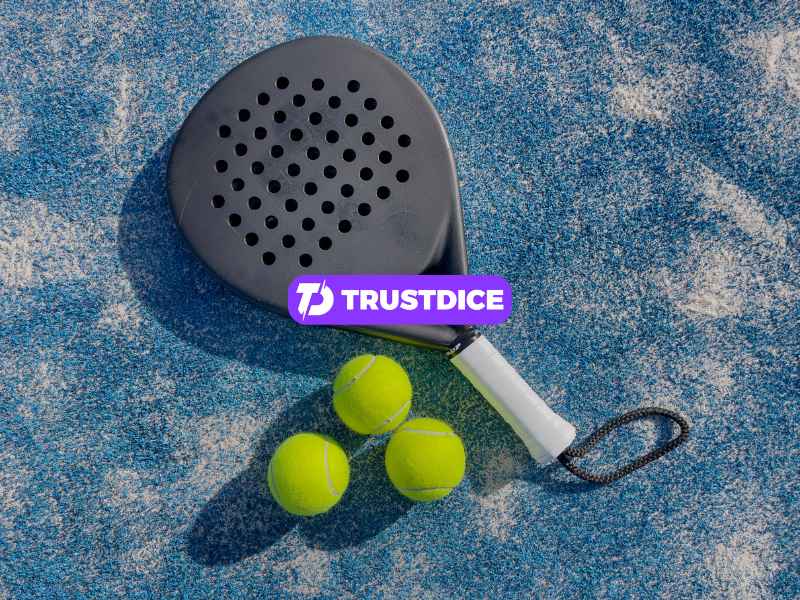
A padel racket is thicker than a pickleball paddle and contains holes across its solid face. It usually has an internal foam or rubber core and must include a wrist cord. Round models favor control, while diamond-shaped rackets generally provide more attacking leverage.
A pickleball paddle has a flatter face and a handle similar to those used in other paddle sports. Modern paddles may use fiberglass, carbon fiber, or composite surfaces over polymer or other approved cores.
The balls create an even larger contrast. A padel ball resembles a tennis ball and compresses against the racket. A pickleball is a hollow plastic sphere with holes. It travels more slowly, bounces lower, and can react noticeably to outdoor wind.
| Equipment Factor | Padel Experience | Pickleball Experience |
|---|---|---|
| Contact feeling | Softer, deeper ball compression | Sharper plastic response |
| Typical flight | Faster with more conventional spin | Slower and strongly affected by wind |
| Common beginner priority | Forgiving sweet spot and low balance | Control, comfort, and manageable weight |
How Serving Rules Differ
Both sports require an underhand-style serve, but the procedures are different. In padel, the server first bounces the ball behind the service line and strikes it at or below waist height. It must travel diagonally into the correct service box.
Pickleball allows a volley serve using a specified motion or a drop serve. The ball also travels diagonally, but it must clear the kitchen and land in the correct receiving court. A serve landing on the kitchen line is a fault.
Padel players receive a first and second serve, similar to tennis. Pickleball does not provide the same two-attempt structure after an ordinary service fault.
Scoring: Tennis Tradition vs Rally Numbers
Padel normally uses tennis scoring: 15, 30, 40, game. Six games commonly win a set when the pair leads by two, and a tie-break may resolve a 6–6 score. Matches are usually best of three sets.
Traditional pickleball uses side-out scoring, meaning only the serving team can score. Games are commonly played to 11 points and must be won by two. Doubles score calls contain three numbers: the serving team’s score, the receiving team’s score, and the server number.
Some competitions use rally scoring or another approved format, so players should confirm the system before starting. For a complete beginner, padel scoring is easier if tennis already feels familiar; pickleball scoring requires more attention to service order.
The Kitchen vs the Padel Net
Pickleball players cannot volley while touching the non-volley zone or its boundary lines. Momentum also cannot carry them into that zone after a volley. This prevents players from standing directly above the net and smashing every ball downward.
Players may enter the kitchen to play a ball that has bounced. The popular “dink” is a soft shot designed to land in the opponent’s kitchen and force contact from below net height.
Padel has no kitchen. Players can volley close to the net, making net control a major tactical goal. Opponents usually respond with low passing shots or high lobs that push the attacking pair backward.
Tactical shortcut 🧠
In pickleball, learn to reach the kitchen line without breaking the volley rule. In padel, learn to win the net as a pair and retreat together when an opponent plays a strong lob.
Which Sport Is Easier for Beginners?
Pickleball is generally easier to access. The smaller court, slower ball, and simple equipment allow new players to begin exchanging shots quickly. Singles can also be played when four participants are unavailable.
Padel has a slightly steeper learning curve because beginners must understand wall rebounds, coordinated doubles positioning, overhead techniques, and faster ball movement. However, the walls keep many shots alive, and the underhand serve makes the sport more welcoming than traditional tennis.
Neither sport is automatically easy at an advanced level. Competitive pickleball requires sophisticated dinking, resets, speed-ups, and hand battles. Advanced padel adds complex spins, corner defense, overhead selection, and synchronized court coverage.
Fitness and Injury Considerations
Padel usually involves more running, repeated changes of direction, and overhead strokes. Proper shoes and gradual workload increases are important, especially for players unfamiliar with artificial turf.
Pickleball covers less space, but quick lateral movements and repeated low contacts can still challenge the knees, calves, and lower back. Players should warm up, avoid suddenly increasing match volume, and stop if pain changes their movement.
Which Sport Is Better to Watch?
Padel offers dramatic wall recoveries, powerful smashes, and occasional out-of-court chases. Pickleball produces compact tactical battles in which a patient dink exchange can suddenly become a rapid volley fight.
These differences also matter when researching professional events through a bitcoin sportsbook. Padel analysis should consider partnership chemistry, court speed, and overhead efficiency, while pickleball research may focus more heavily on kitchen control, serve-return patterns, and format.
Anyone exploring bitcoin betting should treat those factors as context rather than certainty. Results remain unpredictable, so use a fixed entertainment budget and never chase losses through a bitcoin sportsbook.
Final Verdict: Padel or Pickleball?
Pickleball is an excellent choice for players seeking simple access, a compact court, lighter equipment, and quick social games. Padel suits those who enjoy athletic doubles play, glass-wall tactics, longer rallies, and a stronger connection to tennis-style movement and scoring.
If both are available locally, try one beginner session in each. The better sport is not determined by popularity or difficulty—it is the one that makes you want to book the next court.