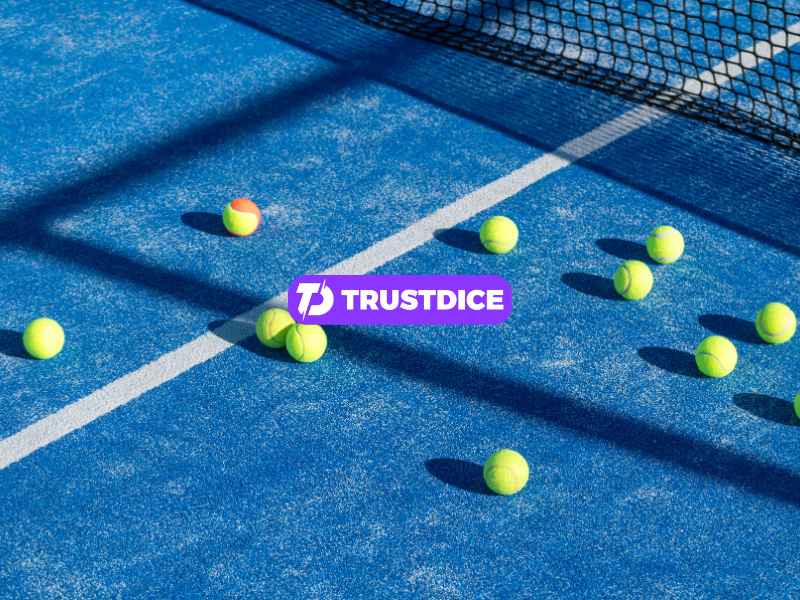








A padel ball and a tennis ball look almost identical. Both are hollow rubber spheres covered in felt, both usually come in bright yellow, and both fit comfortably in the same ball pocket. That similarity tempts many beginners to grab an old can of tennis balls before heading to a padel court.
They may work for a casual warm-up, but they are not the same piece of equipment. The key difference is pressure and rebound behavior. A regulation padel ball is designed to produce a more controlled flight inside an enclosed court, where glass rebounds, quick volleys, and compact swings already make rallies fast.
Quick answer 🎯
Padel balls are generally slightly smaller and operate within a padel-specific pressure and rebound range. A regular tennis ball may feel livelier, travel faster after contact, and rebound more aggressively from the glass.
Official Padel and Tennis Ball Specifications
The safest comparison comes from the governing bodies rather than packaging claims. The International Padel Federation’s 2026 rules define the permitted dimensions, weight, pressure, and rebound of an official padel ball. Tennis specifications are published in the 2026 ITF Rules of Tennis.
| Specification | Regulation Padel Ball | Standard Type 2 Tennis Ball |
|---|---|---|
| Weight | 56.0–59.4 g | 56.0–59.4 g |
| Diameter | 6.35–6.77 cm | 6.54–6.86 cm |
| Test-drop height | 2.54 m | 2.54 m |
| Permitted rebound | 135–145 cm | 135–147 cm |
The figures overlap considerably. Weight is identical, while the permitted diameter and rebound ranges are close. This explains why the two balls can appear interchangeable during a quick inspection. However, specification ranges do not describe the entire playing sensation. Internal pressure, rubber construction, felt, deformation, age, temperature, and altitude all affect how a particular ball performs.
The Main Difference: Pressure and Playing Speed
Players commonly describe a padel ball as having lower pressure than a tennis ball. In practical terms, a padel ball normally feels slightly less explosive when it leaves the racket or rebounds from the glass. That controlled response suits a smaller court measuring 20 by 10 meters.
A lively tennis ball can accelerate rallies beyond the intended rhythm of padel. Volleys may spring away more sharply, defensive rebounds can leave the back glass faster, and a hard smash may become unusually difficult to retrieve. Beginners often respond by shortening their swings or standing too far behind the baseline, creating habits that do not transfer well when regulation padel balls return.
Feel test ⚡
Do not judge the balls only by squeezing them. Play several lobs, volleys, and back-glass returns. The clearest difference usually appears after the bounce and during rebounds from the enclosure.
Why the Difference Matters on Court
1. Glass Rebounds Become More Predictable
Padel defense depends on allowing the ball to pass, hit the glass, and return into a playable position. If the ball is excessively lively, the rebound may travel farther or arrive faster than expected. A regulation padel ball gives players a more appropriate reference point for learning when to move forward, wait, or turn in the corner.
2. Lobs Are Easier to Control
The lob is one of padel’s most important tactical shots. Its purpose is not merely to send the ball high; it must clear the opponents while landing deep enough to recover the net. A faster tennis ball can carry beyond the back line when struck with normal padel technique.
3. Overheads Behave Differently
Bandejas and víboras rely on placement, spin, and controlled depth. An overly responsive ball may reward flat power while making softer overhead patterns harder to judge. It can also exaggerate the effectiveness of smashes that would be defendable with the correct match ball.
4. Reaction Time Changes at the Net
Padel already involves rapid exchanges from short distances. Additional ball speed reduces reaction time and can turn controlled volley sequences into frantic blocks. That may be entertaining, but it is less useful for developing stable technique.
Can You Use Tennis Balls for Padel?
You can physically play padel with tennis balls, and a casual session will not immediately collapse because someone brought the wrong can. If the only alternative is canceling the game, using relatively soft tennis balls may be acceptable for recreational hitting.
For coaching, league matches, serious practice, or tournament preparation, use balls made and approved for padel. Training with the intended equipment makes your timing, shot selection, and wall positioning more transferable. Official competitions require FIP-approved balls rather than whatever looks similar on the clubhouse shelf.
| Situation | Tennis Ball Acceptable? | Best Choice |
|---|---|---|
| Emergency casual game | Usable, but not ideal | A softer, previously opened tennis ball |
| Beginner lesson | Not recommended | Fresh padel balls with controlled speed |
| Match preparation | No | The same approved model used in competition |
| Official competition | No | FIP-approved padel balls |
How Long Do Padel Balls Last?
A pressurized ball begins losing performance after its container is opened. Repeated impacts also wear the felt and change the rubber’s response. There is no universal number of matches because durability depends on storage, playing frequency, temperature, court surface, and hitting intensity.
Replace the balls when their bounce becomes noticeably low or inconsistent, the felt is badly worn, or players must swing harder to achieve ordinary depth. Competitive players may open a fresh can for every match, while recreational groups often use one set for several sessions.
Store opened balls at a stable indoor temperature, away from direct sunlight, moisture, and extreme heat. A pressure-maintaining container may slow performance loss, although it cannot repair damaged felt or cracked rubber.
Consistency tip 🧠
Rotate all three balls during a session. If one ball remains in a pocket for most of the match, wear and pressure changes may become uneven.
Altitude, Temperature, and Court Conditions
Air pressure decreases at altitude, so an ordinary ball behaves more energetically relative to the surrounding atmosphere. The FIP rules allow a different ball above 1,000 meters, with a lower permitted rebound range of more than 121.92 centimeters and less than 135 centimeters.
Heat can also make balls feel livelier, while cold conditions often make them feel slower and firmer. Outdoor humidity, worn felt, and the amount of sand on artificial turf can further change pace. That is why two cans carrying the same product name may not feel identical in different cities or seasons.
Players should warm up with the actual match balls and observe three clues: how far a normal lob travels, how quickly a back-glass rebound returns, and whether controlled overheads remain inside the court.
Choosing the Right Padel Ball
Start by checking that the packaging identifies the product specifically as a padel ball. For competition, confirm that the model appears on the relevant approved-ball list or matches the organizer’s announcement.
Standard-speed balls suit most beginners and recreational sessions. Faster models may be selected for slow conditions, but marketing terms are not perfectly standardized across manufacturers. Whenever possible, test one can before purchasing a large box.
Ball behavior can also help viewers interpret professional matches. Faster conditions may favor aggressive overhead players, while slower balls can extend rallies and reward patient defense. Those observations provide context when researching an event through a bitcoin sportsbook, but equipment alone cannot predict a result.
Partnership form, fitness, court conditions, and tactical matchups remain essential. Anyone considering bitcoin betting should use ball speed only as supporting information, set a fixed entertainment budget, and never chase losses through a bitcoin sportsbook.
Final Thoughts
Padel balls and tennis balls share nearly the same weight, appearance, and basic construction, but their permitted dimensions and playing characteristics are not identical. Padel balls are designed to create controlled speed and reliable rebounds within a compact glass enclosure.
A tennis ball can rescue an informal session, especially if it has already lost some pressure, but it should not become the default. Regulation padel balls provide better practice for lobs, volleys, overheads, and wall defense. Use the equipment intended for the sport, rotate the balls during play, and replace them when their rebound becomes inconsistent.