







A padel racket can influence how quickly you react at the net, how comfortably you defend from the glass, and how much power you generate on overheads. The wrong racket will not automatically ruin your game, but it can make ordinary shots unnecessarily difficult.
Beginners often choose by color, price, or the racket used by a professional player. A better approach is to compare shape, balance, weight, surface material, and core density. Each feature changes how the racket feels during a real rally—not just how impressive it looks in a product photo.
Quick recommendation 🎯
Most beginners should start with a round or forgiving teardrop-shaped racket, low-to-medium balance, a generous sweet spot, and a relatively soft face. Control and maneuverability will help more than maximum smash power.
How Is a Padel Racket Different from a Tennis Racket?
A padel racket has no strings. Its solid hitting surface contains holes and is normally built from a frame, an outer face, and an internal foam or rubber core. The compact design suits the quick reactions, volleys, wall rebounds, and controlled overheads used on a padel court.
Under the International Padel Federation’s rules, the combined length of the head and handle cannot exceed 45.5 centimeters. The racket must also include a non-elastic wrist cord, which players are required to use during competition.
While every legal racket follows the same broad construction rules, manufacturers can adjust its geometry and materials considerably. Those adjustments produce three familiar categories: round, teardrop, and diamond.
The Three Main Padel Racket Shapes
| Shape | Typical Balance | Main Strength | Best Suited To |
|---|---|---|---|
| Round | Low | Control and forgiveness | Beginners and defensive players |
| Teardrop | Medium | Balance between control and power | Improving and all-court players |
| Diamond | High | Power and attacking leverage | Experienced attacking players |
Round Rackets: Control and a Large Sweet Spot
A round racket usually places its sweet spot near the center and carries more weight toward the handle. This makes it easier to move, particularly when blocking fast volleys or reacting to a ball that rebounds unexpectedly from the glass.
The generous sweet spot also reduces the punishment for slightly off-center contact. That does not mean round rackets are only for novices. Control-focused players at advanced levels may prefer them because they support placement, defense, and patient point construction.
Teardrop Rackets: The Versatile Middle Ground
A teardrop racket distributes weight more evenly and normally positions its sweet spot slightly above the center. It offers additional leverage on attacking shots without becoming as demanding as a strongly head-heavy diamond model.
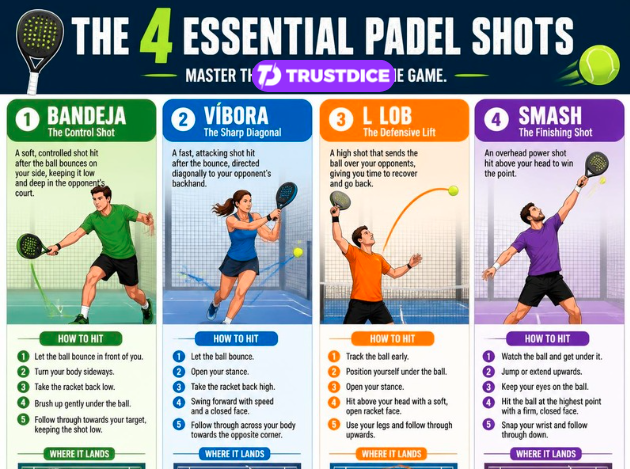
This shape suits players who have developed reliable contact and want more help on bandejas, víboras, and controlled smashes. It is often the safest upgrade after a beginner outgrows a very soft round racket.
Diamond Rackets: Power with a Smaller Margin for Error
A diamond racket usually carries more mass toward the top. That high balance can add momentum to overheads, but it also makes the racket slower to reposition. The sweet spot tends to sit higher and may be less forgiving.
According to HEAD’s racket construction guide, diamond models are generally associated with aggressive play, while round models favor control. A diamond racket makes sense when a player already times the ball cleanly and can manage the additional load during long matches.
What Does Racket Balance Mean?
Balance describes where the racket’s weight is concentrated. Two rackets can display the same total weight while feeling completely different in the hand.
| Balance | On-Court Feeling | Possible Advantage | Possible Drawback |
|---|---|---|---|
| Low | Light and quick near the handle | Easy defensive reactions | Less natural overhead momentum |
| Medium | Neutral and versatile | Useful across most situations | No extreme specialist benefit |
| High | Heavier toward the head | More leverage on attacking shots | Slower handling and greater fatigue |
A high-balance racket may feel manageable for five minutes but demanding after an hour of repeated overheads. Test its maneuverability by preparing several volleys and controlled overhead swings, not by simply holding it at your side.
Buying tip ⚡
Never judge a racket from its listed weight alone. Shape, balance, grip size, protectors, and overgrips all influence its effective swing weight.
Choosing the Right Racket Weight
Adult padel rackets commonly sit somewhere around the mid-300-gram range, although lighter and heavier models are available. A lighter racket is easier to accelerate and reposition, helping beginners, juniors, and players who prioritize comfort. A heavier racket can feel more stable against fast shots and may transfer greater momentum through the ball.
Heavier is not automatically better. If the racket causes a late contact point, slower defensive reactions, or forearm fatigue, its theoretical stability offers little practical value. Players with previous wrist, elbow, or shoulder discomfort should be particularly cautious and seek appropriate professional advice if pain continues.
Fiberglass vs Carbon Fiber
The hitting face is commonly made from fiberglass, carbon fiber, or a hybrid combination. Fiberglass generally feels softer and more elastic. It can provide comfortable ball release at slower swing speeds, making it attractive for recreational players.
Carbon fiber is normally firmer, more responsive, and resistant to deformation. Manufacturers use different carbon weaves, so labels such as 3K or 12K should not be treated as a universal performance ranking. Resin, layering, frame design, and core density also affect the final feel.
A hybrid face attempts to combine accessible comfort with additional stability. For example, Bullpadel describes some of its rackets as using Fibrix hybrid fiber faces with carbon frames and multi-density EVA cores. The important lesson is that one material name never tells the complete story.
Soft and Hard Racket Cores
The internal core influences how long the ball remains in contact with the face and how much force is required to create useful speed. A softer core usually feels comfortable and helps the ball travel when the player uses a compact swing. It may also absorb some of the harsh sensation from imperfect contact.
A harder core generally offers a more direct response and greater precision for players who accelerate confidently. However, it can feel unforgiving at low speed. Temperature may also change the playing sensation, with some materials feeling firmer in cold conditions and livelier in heat.
Beginner rule 🧠
Choose a racket that helps on ordinary defensive shots and volleys. A model that only feels impressive during a perfect smash is unlikely to support most of your points.
How to Match a Racket to Your Playing Style
| Player Profile | Practical Starting Choice | Reason |
|---|---|---|
| Complete beginner | Round, low balance, soft face | Forgiving and easy to maneuver |
| Improving all-court player | Teardrop, medium balance | Combines control with usable power |
| Defensive control player | Round or controlled teardrop | Supports lobs, blocks, and wall defense |
| Experienced attacker | Firm teardrop or diamond | Adds leverage to overhead attacks |
Do not copy a professional’s equipment without considering the difference in technique. Elite players generate clean contact, prepare early, and possess the strength to control demanding rackets. Their preferred model may expose rather than solve a recreational player’s weaknesses.
What to Check Before Buying
If possible, test the racket during a proper session. Hit defensive lobs, volleys, back-glass returns, and overheads. Check whether you can change direction quickly and whether off-center contact produces uncomfortable vibration.
Inspect the wrist cord, frame, face, and edge protection. Confirm that the handle remains comfortable after adding an overgrip. An excessively thick or thin grip can create unnecessary tension in the hand and forearm.
Price should reflect your actual playing frequency. A durable, forgiving mid-range racket is often more useful than a premium professional model. Money saved can be spent on coaching, court time, or suitable shoes—all of which may improve a beginner’s game more quickly.
Equipment Context for Padel Viewers
Racket choice can help spectators understand different professional styles. An aggressive player may favor a firmer, higher-balance model, while a control-oriented partner may prioritize maneuverability. However, equipment alone should never be used to predict a result through a bitcoin sportsbook.
Form, partnership chemistry, court speed, and fitness remain more meaningful than a new racket release. Anyone exploring bitcoin betting should use equipment information only as supporting context, maintain a fixed entertainment budget, and never chase losses through a bitcoin sportsbook.
Final Thoughts
The best padel racket is the one you can control throughout an entire match. Round rackets usually provide the easiest starting point, teardrop models offer versatile progression, and diamond shapes reward technically confident attackers.
Compare balance and weight together, then consider whether fiberglass, carbon fiber, or a hybrid face provides the comfort and response you need. Test real padel shots whenever possible. A forgiving racket that improves timing, defense, and confidence will contribute more to your development than the most powerful model on the shelf.