







Professional padel has developed into a genuinely international sport, with elite players traveling between major tournaments throughout the season. For new fans, however, the calendar can be confusing. Different tournament categories, ranking points, changing partnerships, and packed schedules all influence how the professional circuit develops.
If you want to follow padel in 2026, understanding the tournament structure is just as important as knowing the players. This guide explains how major events work, what to watch during a tournament week, and why rankings and pair chemistry matter throughout the season.
How Does Professional Padel Work in 2026?
At the highest level, professional padel is built around an international tournament circuit. Players compete as pairs, progressing through draws while collecting results and ranking points across the season.
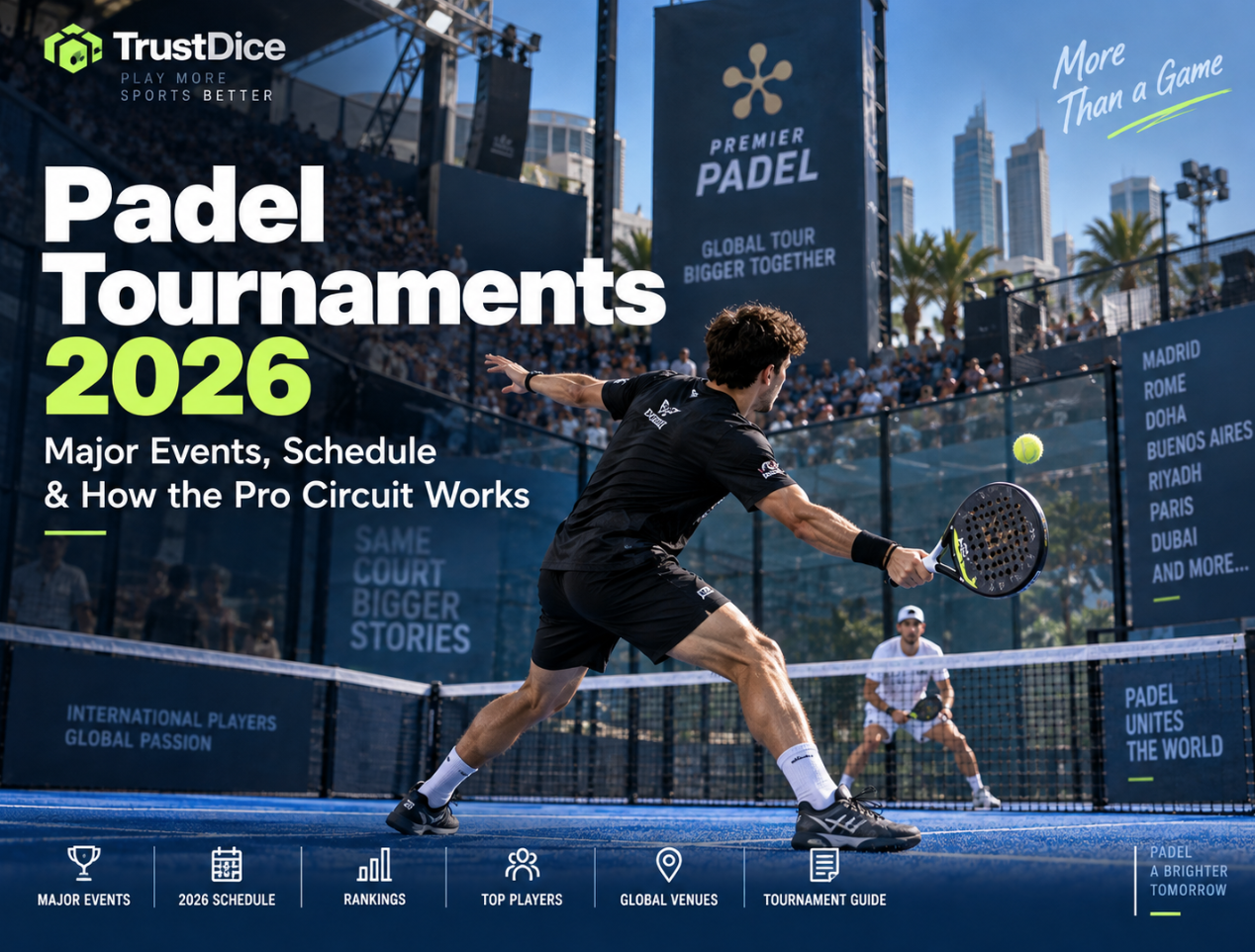
Premier Padel has become the central global tour, with events staged across multiple countries. The circuit includes different tournament categories, meaning not every event carries identical prestige or ranking value.
Quick Guide 🎯
Think of the professional season as a connected series of tournaments rather than one continuous league. Results accumulate throughout the year and influence rankings, qualification, seeding, and the season-ending picture.
Understanding Premier Padel Tournament Categories
The tournament category gives fans an immediate indication of an event's position within the professional calendar. Major competitions attract the strongest players and can have significant ranking implications.
| Event Type | Role | Why Fans Should Care |
|---|---|---|
| Major | Top-level showcase | Major ranking and championship significance |
| P1 | High-level tour event | Regularly features elite pairs |
| P2 | Tour-level competition | Can create opportunities for ranking movement |
| Finals | Season-ending competition | Brings leading performers together |
For exact 2026 dates and venues, fans should always check the official Premier Padel calendar because scheduling can be updated during the season.
Why Major Tournaments Matter
Major tournaments are among the most important stops of the year. They provide opportunities for leading pairs to strengthen their ranking positions while giving challengers a chance to make a significant run against elite opposition.
From an analyst's perspective, these events are particularly useful because deeper draws reveal more than a single isolated match. A pair may need to defeat several different playing styles during one tournament.
That exposes weaknesses quickly. A partnership that looks dominant against defensive opponents may have more difficulty against aggressive net players or pairs capable of consistently neutralizing overheads.
What Happens During a Tournament?
A professional padel event generally progresses through elimination rounds toward the final. Early rounds reduce the field before the strongest surviving pairs reach the decisive stages.
| Stage | What to Watch |
|---|---|
| Early Rounds | Upset potential and new partnerships |
| Round of 16 | Stronger tactical matchups emerge |
| Quarterfinals | Leading pairs increasingly collide |
| Semifinals | High-pressure elite competition |
| Final | Tournament title decided |
Watching an entire tournament rather than only the final provides much better context. You can see whether a pair arrives fresh after comfortable victories or has already survived several physically demanding matches.
Rankings Add a Season-Long Storyline
Rankings transform individual tournaments into a larger season narrative. Strong results help players maintain or improve their positions, while repeated early exits can create pressure.
Rankings also matter because they can influence tournament seeding. Higher-seeded pairs are generally positioned in the draw so that the strongest teams do not immediately face each other.
🏆 Viewing Tip: Do not look only at who won the previous tournament. Check how consistently a pair has reached quarterfinals, semifinals, and finals across multiple events.
Why Partnerships Can Change During the Season
Padel rankings measure individual players, but matches are won by pairs. That creates one of the sport's most interesting dynamics: partnership changes.
A new combination can bring together two highly ranked players without immediately producing perfect chemistry. They still need to establish communication, court coverage, middle-ball responsibility, and attacking patterns.
When analyzing live professional matches, we pay particular attention to how pairs react after losing net position. Established partnerships often reorganize almost automatically, while newer combinations can occasionally leave exploitable gaps.
How to Analyze a Padel Tournament
Start with the draw. Identify which leading pairs occupy each section and consider the potential paths toward the later rounds.
Then examine recent form. A ranking tells you the broader competitive level of a player, while recent tournaments provide more immediate information about performance.
Conditions also matter. Indoor and outdoor environments can produce different match dynamics, while temperature, court characteristics, and ball behavior may influence how effective certain attacking styles become.
Match Analysis ⚡
A tournament draw is not just a list of names. Look at possible opponents, previous matchups, recent workload, pair stability, and whether the conditions favor aggressive or controlled play.
Padel Tournaments and Betting Markets
Major professional events also attract sports gaming markets. Anyone researching padel betting should understand the tournament structure before interpreting odds.
A favorite entering an event may face a difficult section of the draw, while another pair could arrive after several demanding matches. Rankings, head-to-head records, partnership changes, recent form, and playing conditions provide useful context, but none guarantees a particular result.
Markets can change as tournaments progress, particularly after injuries, withdrawals, completed matches, or updated information.
How to Follow the 2026 Padel Season
The simplest approach is to follow the official tournament calendar and rankings throughout the year. Before each major event, check the draw and identify notable potential matchups.
During the tournament, follow complete results rather than highlights alone. A spectacular smash tells you very little about how consistently a pair performed across three sets.
Fans using gaming platforms should also pay attention to domain security. Information concerning crypto casino mirror sites should be verified before using alternative access links.
Similarly, users looking for a trustdice mirror site should confirm the address rather than entering account details through an unknown third-party link.
Padel Tournament FAQ
What is Premier Padel?
Premier Padel is the leading international professional circuit, featuring tournaments across multiple countries and categories.
Are all padel tournaments equally important?
No. Tournament categories differ in status and ranking significance, making some events more consequential within the season.
Can professional padel players change partners?
Yes. Partnership changes are an important part of professional padel and can significantly affect tactical performance.
Where can I find the latest 2026 schedule?
Use the official Premier Padel calendar for current tournament dates, venues, draws, and schedule updates.
Final Thoughts
Following professional padel becomes much more interesting once you understand how individual tournaments connect to the wider season. Majors, tour events, rankings, draws, and partnership changes create storylines that develop over months rather than a single weekend.
When watching the 2026 circuit, pay attention to consistency, pair chemistry, tournament paths, and tactical matchups instead of focusing only on famous names. Those details reveal how professional padel really works—and why one tournament can reshape the competitive picture for the events that follow.