







Learning how to play padel is easier than mastering it. Most beginners can serve, return the ball, and enjoy rallies during their first session, but good padel requires much more than simply hitting the ball over the net.
The biggest improvements usually come from positioning, teamwork, wall awareness, and shot selection. Instead of trying to hit harder, beginners should learn how to control space and build points. This guide covers the essential techniques and tactics you need to start playing smarter in 2026.
Start With the Basic Padel Setup
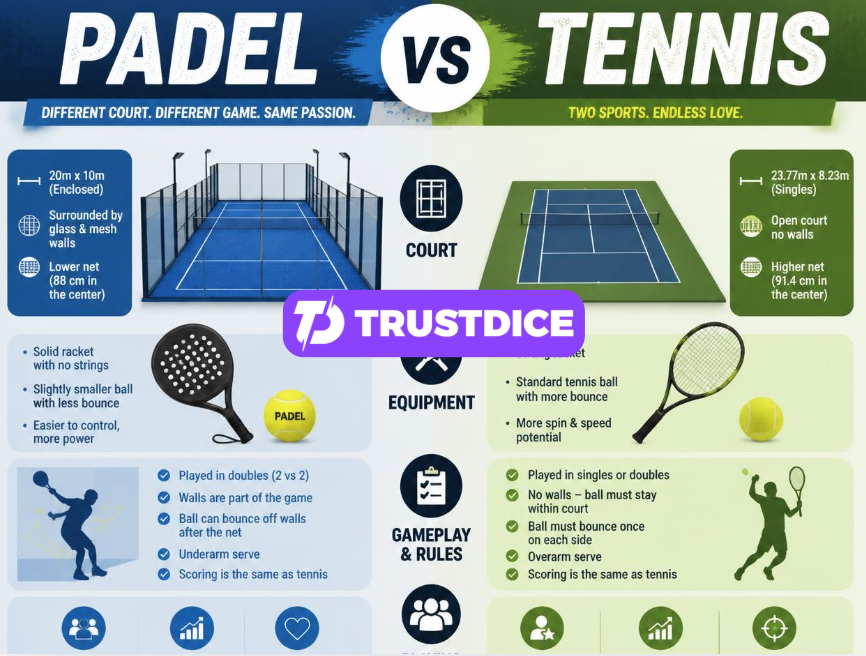
Padel is normally played as doubles on a 20 × 10 meter enclosed court. Each team has two players, and a net divides the playing area.
The scoring system is similar to tennis, while the serve is performed underarm. The major difference is the enclosure: after a legal bounce, the ball can rebound from the glass and remain playable.
| Skill | Beginner Priority |
|---|---|
| Serve | Consistency over power |
| Groundstrokes | Control and placement |
| Glass | Learn to read rebounds |
| Positioning | Move with your partner |
Master a Reliable Serve First
A padel serve does not need extreme speed. Bounce the ball, strike it underarm according to the applicable rules, and send it diagonally into the correct service box.
For beginners, placement is more valuable than power. A controlled serve gives you time to move forward and prepare for the return.
Pro Tip 🎯
Think of the serve as the first move in a sequence. Your objective is not necessarily to win immediately—it is to create a favorable next shot.
Learn to Use the Glass
Wall rebounds are often the most confusing part of padel for new players. When an opponent hits a deep ball, your instinct may be to rush toward it before it reaches the back glass.
That can actually make the return harder.
Instead, create enough space to allow a legal ball to bounce and rebound from the glass. Watch its trajectory and strike it as it comes back toward you.
During our match analysis, experienced defenders consistently use the glass to gain extra time. Once beginners stop treating the wall as an obstacle, their defensive game usually becomes much calmer.
Move Together With Your Partner
Padel is fundamentally a team game. One of the most common beginner mistakes is having one player at the net while the other stays near the back wall.
This creates a large diagonal gap for opponents to attack.
Instead, think of your pair as one unit. When your partner moves forward, adjust forward. When your team is pushed backward, recover together.
| Situation | Common Mistake | Better Choice |
|---|---|---|
| Opponent controls net | Hit harder | Try a deep lob |
| Ball reaches glass | Rush toward it | Read the rebound |
| Partner advances | Stay behind | Advance together |
Fight for Net Position
The net is one of the strongest attacking positions in padel because volleys reduce your opponents' reaction time and allow you to create sharper angles.
However, you should not charge forward without a reason. Use a strong return, deep shot, or lob to create an opportunity to advance.
If opponents already control the net, a lob is often more effective than trying to drive directly through them. A good lob forces them backward and gives your pair an opportunity to move forward.
⚔️ Tactical Insight: Many padel rallies are really battles over court position. Watch which pair controls the net and which pair is repeatedly forced to defend near the glass.
Stop Trying to Hit Winners Every Time
New players frequently assume stronger shots mean better padel. The enclosed court makes that approach unreliable because opponents can sometimes recover powerful shots through wall rebounds.
Consistency matters more.
Use controlled volleys, lobs, and carefully placed groundstrokes to create progressively better opportunities. The winning shot often comes several shots after the tactical advantage was created.
Five Common Beginner Mistakes
- Using too much power: placement is often more effective.
- Ignoring the glass: wall rebounds are a defensive tool.
- Standing too far from your partner: large gaps create easy targets.
- Staying permanently at the back: learn when to challenge for the net.
- Ignoring recovery position: prepare for the next shot immediately after hitting.
How Better Match Reading Improves Your Game
Watching experienced players can accelerate your tactical understanding. Instead of following only the ball, observe where all four players move after each shot.
Look for net control, defensive spacing, lob selection, communication, and how pairs react after losing an attacking position.
These details are also relevant when researching padel betting. Evaluating a professional match involves more than individual reputation. Pair chemistry, recent performance, tactical matchups, conditions, and tournament format can provide useful context when interpreting a fixture.
Following Padel Online Safely
As padel attracts a larger international audience, more platforms are covering professional matches and related markets. Users should always verify the domain they are visiting before entering personal or account information.
If alternative access is required, information about crypto casino mirror sites should be verified instead of relying on unknown links shared through social media or messages.
The same applies when locating a trustdice mirror site: confirm that the address comes from a legitimate source before proceeding.
Final Thoughts
The fastest way to improve at padel is not to hit harder. Learn to control the ball, understand the glass, move with your partner, and recognize when to attack the net.
Start with consistent serves and simple returns. Then practice wall rebounds and lobs before worrying about advanced overhead shots. As your positioning improves, rallies become easier to read and your shot selection becomes more deliberate.
That is the real progression in padel: fewer desperate shots, better positioning, and smarter decisions.