







Winning more padel matches is rarely about hitting the ball harder. Once players develop reliable basic technique, positioning and decision-making become far more important. A controlled lob at the right moment can create more pressure than a powerful groundstroke hit directly toward an opponent.
That tactical depth is what makes padel so interesting. Every rally becomes a battle for net position, space, and time. This guide explains the essential padel strategies beginners and intermediate players can use in 2026 to make smarter decisions and win more points.
Control the Net Whenever Possible
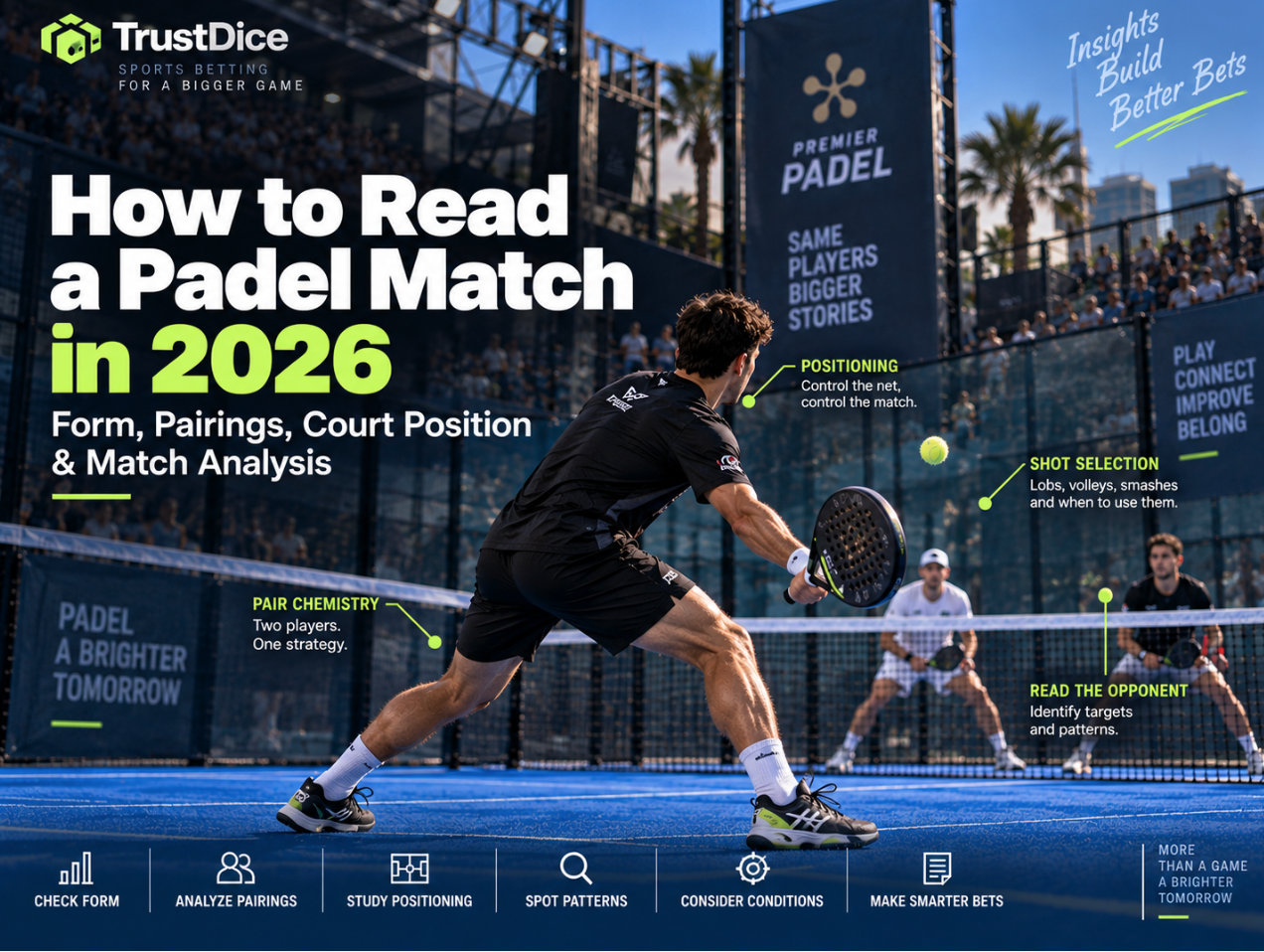
One of the most important concepts in padel is net control. When your pair occupies a strong position near the net, you can intercept balls earlier and attack with volleys before opponents have time to reorganize.
However, running forward without creating an opportunity is a common mistake. Move toward the net after playing a shot that puts opponents under pressure, such as a deep return or effective lob.
| Situation | Smart Tactical Response |
|---|---|
| Opponents control the net | Use a deep lob to push them backward |
| Opponent returns a weak ball | Advance and apply volley pressure |
| Your pair is under pressure | Defend patiently and rebuild the rally |
| Opponent is out of position | Attack the available space rather than maximum power |
Pro Tip 🎯
Think of the net as territory. You do not need to win every point immediately after reaching it. Maintaining the attacking position can be more valuable than attempting a low-percentage winner.
Use the Lob as an Attacking Tool
Beginners often think of the lob as an emergency defensive shot. In padel, it is one of the most important tactical weapons.
Imagine both opponents are positioned comfortably near the net. A hard drive gives them another opportunity to volley. A deep lob forces them to turn, retreat, or attempt an overhead from a less comfortable position.
Your pair can then move forward and challenge for net control.
The best lobs are not necessarily extremely high. Depth matters. A short lob can create an easy overhead opportunity, while a deeper ball can force opponents closer to the back glass.
Move as a Pair, Not Two Individuals
Good padel positioning depends heavily on your partner. If one player moves forward while the other remains deep, a large diagonal gap appears between them.
Experienced opponents immediately recognize this space.
Instead, partners should generally move forward, backward, and laterally as a coordinated unit. Imagine an invisible rope connecting the two players. The distance can change slightly, but it should rarely become unnecessarily large.
⚔️ Tactical Rule: Before asking whether your position is good, ask whether your position makes sense relative to your partner.
Stop Trying to Finish Every Point
One of the biggest differences between recreational and experienced padel is patience.
Beginners frequently see a ball above net height and immediately attempt a winner. Sometimes that works. Often it produces an unnecessary error.
Higher-level players are comfortable using several shots to create the right opportunity. A controlled volley might force an awkward return. The next shot pushes the opponent deeper. Only then does the finishing opportunity appear.
| Beginner Habit | Smarter Alternative |
|---|---|
| Hit every ball hard | Change pace and placement |
| Attack from poor positions | Wait for a better opportunity |
| Ignore partner position | Move together |
| Panic near the glass | Create space and read the rebound |
Use the Glass to Buy Yourself Time
When defending, the back glass can become an advantage rather than an obstacle. A deep shot does not always need to be intercepted immediately.
Allowing a legal ball to rebound can give you additional time and produce a more comfortable hitting position.
In our analysis of stronger players, one noticeable difference is how calmly they defend near the glass. Instead of chasing the ball, they anticipate where the rebound will arrive.
This reduces rushed swings and makes it easier to play a controlled defensive shot or lob.
Target Space Instead of Players
Power is useful when an obvious finishing opportunity appears, but placement can create pressure without requiring maximum speed.
The middle of the court is particularly interesting because both opponents may hesitate over responsibility. Shots toward the feet can also make clean volleys difficult.
Another option is to move opponents before attacking the newly created space. For example, several shots toward one side can shift the defensive structure before a controlled ball is directed elsewhere.
Match Insight 🏆
A successful tactical shot does not always win the point. Sometimes its purpose is simply to make the next shot easier.
Recognize Your Opponents' Patterns
During a match, start identifying tendencies. Does one player struggle with the back glass? Does someone repeatedly produce short lobs under pressure? Which opponent makes more errors when defending the middle?
Professional pairs constantly search for these patterns.
Once a weakness becomes visible, the objective is not necessarily to attack it aggressively every time. Consistent pressure can be more effective because it forces the opponent to repeatedly solve the same uncomfortable situation.
Why Strategy Matters When Analyzing Professional Padel
The same principles can improve how you watch professional matches. Instead of judging players only by rankings or spectacular highlights, examine how each pair controls territory.
Anyone researching padel betting can use tactical analysis as additional context. Pair chemistry, net control, recent form, playing conditions, head-to-head history, and partnership changes can all influence how a matchup develops.
None of these factors guarantees an outcome. They simply provide a more complete picture than rankings alone.
Build a Simple Padel Strategy Checklist
- Move with your partner rather than independently.
- Challenge for net position when the opportunity appears.
- Use deep lobs to move opponents backward.
- Let appropriate defensive balls rebound from the glass.
- Reduce unnecessary power when under pressure.
- Target open space and uncomfortable positions.
- Watch for repeated opponent weaknesses.
- Recover your position immediately after every shot.
Follow Padel Online Safely
As professional padel attracts more online coverage, fans increasingly use digital platforms for schedules, statistics, streaming, and sports markets. Domain verification should always be part of that process.
If you encounter crypto casino mirror sites, verify the destination before entering login information rather than relying on unknown links shared through third parties.
The same applies when searching for a trustdice mirror site. Confirm that you are visiting the intended address before entering account information.
Final Thoughts
Better padel strategy starts with patience. Control the net when possible, use lobs to change court position, defend intelligently through the glass, and move together with your partner.
Most importantly, stop treating every ball as an opportunity to hit a winner. The strongest tactical players create pressure gradually until opponents run out of comfortable options.
Once you begin thinking about space and positioning instead of simply power, padel becomes a completely different game—and your decisions become much harder for opponents to predict.