







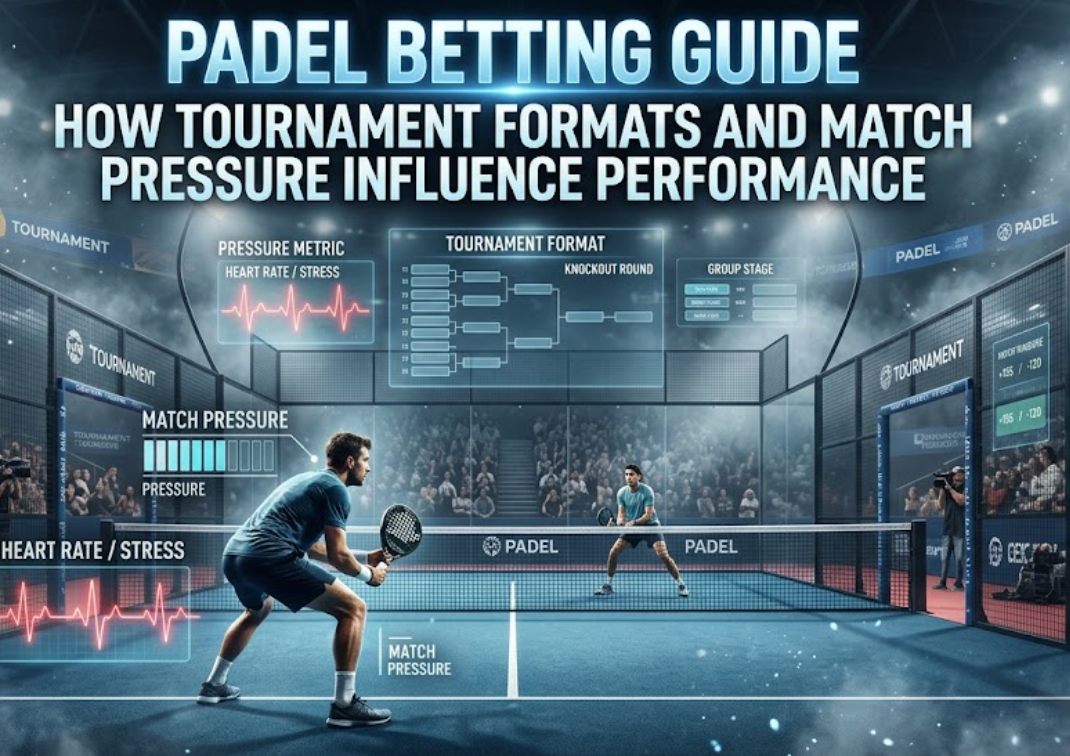
Not every professional padel match takes place under identical competitive circumstances. An early-round encounter, a semifinal, and a championship final can involve different levels of preparation, recovery time, and psychological pressure.
These differences do not guarantee particular outcomes, but they provide valuable context for understanding player performance.
For readers interested in padel betting, tournament structure is an important analytical consideration alongside rankings, tactical matchups, and recent results.
🏆 Understanding Professional Padel Tournament Structure
Professional padel competitions commonly use elimination formats, although specific qualification procedures, draw sizes, and scoring regulations depend on the event.
Players must navigate successive rounds against increasingly competitive opposition to reach the final stages.
However, tournament progress should not be interpreted as a simple measurement of ability. Draw difficulty, opponent characteristics, and match conditions can vary substantially.
Common Tournament Stages
| Tournament Stage | Analytical Consideration | Potential Limitation |
|---|---|---|
| Qualification | Additional competitive workload | Opponent quality varies |
| Early Main-Draw Rounds | Initial tournament adaptation | Limited current-event evidence |
| Quarterfinals | Accumulated workload | Different previous match lengths |
| Semifinals and Finals | High competitive stakes | Pressure responses vary individually |
These categories provide a general framework. Analysts should confirm the specific competition format rather than assuming every event follows identical procedures.
⚔️ How Match Pressure Influences Tactical Decisions
Important tournament matches may place additional demands on concentration, communication, and decision-making.
However, pressure does not affect every partnership in the same way. Some players respond with controlled execution, while others may become more aggressive or conservative.
Risk Management
During important points, players must decide whether to attempt aggressive winners or prioritize rally consistency.
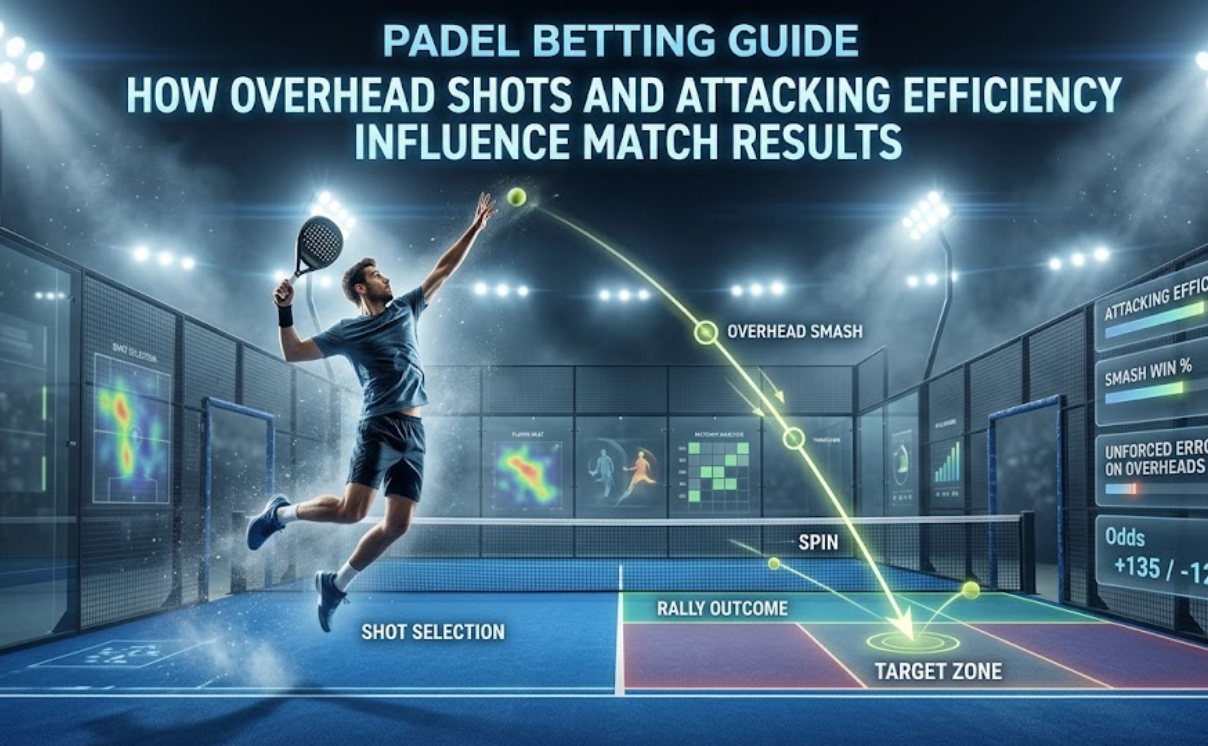
A powerful smash might be appropriate when the attacking position is favorable. The same attempt could become unnecessarily risky when the player is poorly balanced.
Partnership Communication
Effective communication helps players coordinate court coverage and avoid confusion during difficult exchanges.
Miscommunication may become especially costly when both players hesitate over central balls or fail to recover their positions together.
Emotional Regulation
Players must recover mentally after mistakes and maintain focus throughout extended matches. Nevertheless, visible frustration should not automatically be interpreted as evidence of future poor performance.
🎯 Pro Tip: Evaluate how partnerships execute their usual tactical patterns during important points. Avoid making assumptions about mental strength based solely on facial expressions or emotional celebrations.
📊 Comparing Different Tournament Circumstances
Tournament context can influence preparation and recovery, but individual circumstances must be verified before drawing conclusions.
| Circumstance | Potential Influence | Research Requirement |
|---|---|---|
| Long Previous Match | Additional physical workload | Verify duration and recovery time |
| Short Previous Match | Potentially lower workload | Consider intensity and conditions |
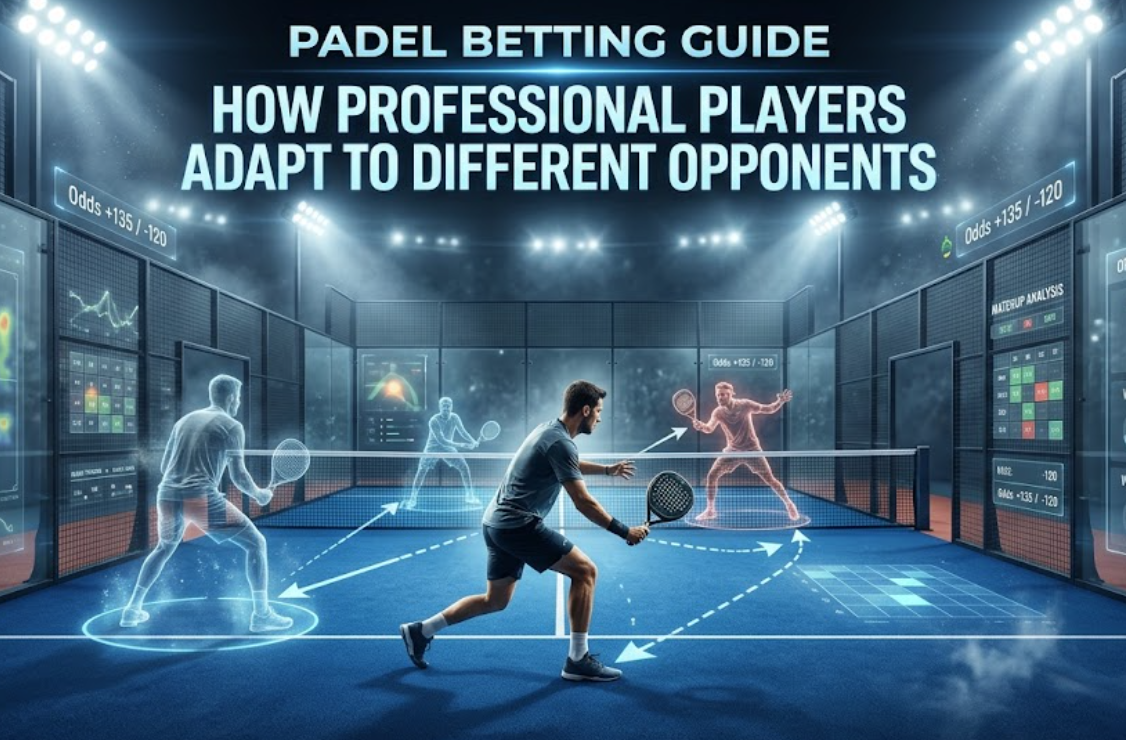
| Different Opponent Styles | Changing tactical demands | Review actual matchups |
| Final-Round Pressure | Greater competitive significance | Avoid unsupported psychological claims |
The table illustrates potential considerations rather than proven performance effects. Each factor should be assessed using available evidence.
🎾 Why Previous Match Duration Matters
A partnership that has completed several demanding matches may face different recovery requirements from opponents who progressed through shorter encounters.
However, match duration alone cannot establish fatigue. Playing intensity, rest periods, environmental conditions, and individual fitness all influence physical recovery.
A long match featuring controlled rallies may create different demands from a shorter encounter involving repeated explosive movements.
Analysts should therefore avoid treating total playing time as a precise measurement of physical readiness.
Practical Workload Checklist
- How long did each partnership's previous match last?
- How much recovery time is available before the next round?
- Were previous matches played under demanding environmental conditions?
- Did either partnership demonstrate visible movement difficulties?
- Are there verified reports affecting player availability?
Unverified injury rumors should never be treated as established facts.
🏆 Using Official Tournament Information
The International Padel Federation provides rankings, regulations, and competition resources.
Premier Padel publishes official tournament information, including draws, schedules, and results.
These resources help analysts verify competitive circumstances before comparing partnerships.
For example, a player reaching a final after a difficult series of matches may have demonstrated strong competitive performance. However, that achievement does not automatically prove superior fitness or guarantee another victory.
Likewise, an easier route through the draw does not necessarily indicate that a partnership is less prepared for stronger opposition.
💰 Tournament Context and Market Analysis
Tournament structure may influence expectations, but individual observations must be considered alongside market pricing.
In padel betting, analysts should investigate whether odds already reflect recent workload, opponent quality, and competitive circumstances.
Suppose hypothetical decimal odds of 2.25 are available for one partnership. These correspond to a break-even probability of approximately 44.4%, before accounting for the overall bookmaker margin.
That figure represents a mathematical threshold, not the partnership's actual winning probability.
Estimating true probability requires broader evidence and recognition of uncertainty.
⚡ Betting Insight: Do not assume that a longer previous match automatically makes a partnership vulnerable. Recovery, tactical efficiency, and individual physical condition matter, and available information may be incomplete.
🔐 Reliable Research and Secure Platform Access
Official schedules, verified results, and competition regulations should form the foundation of tournament analysis.
Searches involving crypto casino mirror sites may expose users to imitation websites or misleading promotional material.
Before accessing a trustdice mirror site, independently verify authenticity, security arrangements, and regional availability.
Wagering involves financial risk. Establish spending limits, avoid chasing losses, and never treat tournament analysis as a guarantee of financial returns.
💡 Final Thoughts
Tournament formats and competitive circumstances provide valuable context for understanding professional padel performance. Match workload, recovery opportunities, opponent difficulty, and tactical pressure can all influence how partnerships approach competition.
However, these factors should never be interpreted in isolation. A demanding tournament route does not automatically predict fatigue, and a championship final does not guarantee unusual psychological behavior.
By combining official tournament information with careful tactical observation, spectators can develop a more complete understanding of professional padel while maintaining realistic expectations about uncertainty.