







One of the biggest differences between an exciting padel highlight and a successful tactical decision is what happens next. A spectacular smash may attract attention, but a controlled volley that keeps opponents trapped behind the service line can be equally valuable.
Professional padel rewards intelligent shot selection. Players constantly decide whether to attack, defend, reset the rally, or maintain their current position. These decisions influence both point outcomes and the consistency of a partnership's performance.
For readers exploring padel betting, understanding shot selection provides a useful alternative to evaluating players exclusively through spectacular winners or final scores.
🎯 What Makes a Shot Selection Decision Effective?
An effective shot is not necessarily the most powerful or technically difficult option. It is the choice that best fits the player's position, the incoming ball, and the opponents' court coverage.
For example, attempting a powerful smash while moving backward may create unnecessary risk. A controlled overhead could preserve net position and force opponents to defend another shot.
Similarly, a defender under pressure might choose a high lob rather than an ambitious passing winner.
Common Shot Selection Decisions
| Situation | Possible Choice | Primary Objective |
|---|---|---|
| Comfortable Overhead | Aggressive smash | Finish the point |
| Difficult Overhead | Controlled bandeja | Preserve net position |
| Defensive Pressure | Deep lob | Recover court position |
| Short Opponent Return | Placed volley | Create attacking pressure |
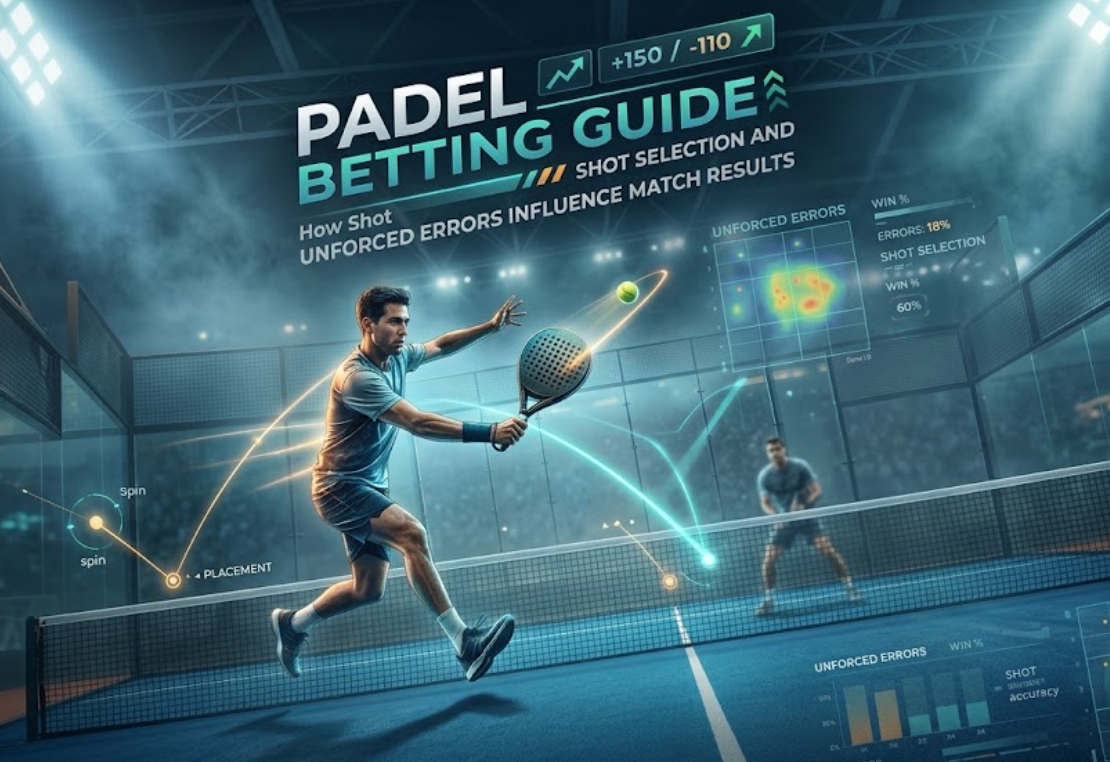
⚔️ Understanding Unforced Errors
An unforced error generally describes a mistake made when a player had a reasonable opportunity to execute the shot successfully. However, classification can involve judgment, and different statistical providers may use different criteria.
Not every missed shot should be treated as an unforced error. A player struggling to return an exceptionally difficult overhead may simply be responding to effective attacking play.
This distinction matters because raw error counts can misrepresent performance when the difficulty of incoming shots differs substantially.
Risk and Reward
Aggressive shots may create more immediate winning opportunities, but they can also increase execution risk. Conservative decisions may reduce certain mistakes while allowing opponents to maintain attacking pressure.
Successful partnerships balance these competing objectives according to the situation.
🎯 Pro Tip: When a player misses an attacking shot, examine whether the decision was appropriate. A technically difficult attempt from poor positioning may reveal more than the error itself.
📊 Comparing Aggressive and Controlled Shot Selection
Different approaches offer different advantages. Neither aggressive nor conservative play is automatically superior.
| Factor | Aggressive Approach | Controlled Approach |
|---|---|---|
| Primary Goal | Create immediate winners | Build favorable positions |
| Execution Risk | Can be higher | Often more manageable |
| Rally Duration | May shorten exchanges | May extend exchanges |
| Tactical Vulnerability | Counterattacks after mistakes | Sustained opponent pressure |
These comparisons describe tendencies rather than fixed outcomes. Technical ability and opponent positioning determine whether a shot is appropriate.
🏆 How to Analyze Shot Selection During Matches
Begin by observing the circumstances surrounding each attacking opportunity. Is the player balanced? Are opponents positioned deep? Does the chosen shot preserve a favorable formation?
Next, consider how the partnership responds after unsuccessful attempts. Strong tactical teams can adjust their approach without abandoning effective attacking opportunities entirely.
Official competition information from the International Padel Federation and Premier Padel provides useful context for reviewing professional matches.
Practical Observation Checklist
- Are aggressive shots attempted from balanced positions?
- Do controlled overheads maintain net dominance?
- Are errors caused by poor decisions or difficult incoming balls?
- Does one partnership adjust after repeated mistakes?
- Are attacking opportunities created through deliberate rally construction?
These observations can reveal whether a partnership's approach appears sustainable across extended competition.
💰 Evaluating Shot Selection in Market Analysis
Shot selection can influence competitive expectations, but analysts should avoid assigning precise probabilities based on subjective impressions alone.
In padel betting, error patterns should be considered alongside opponent quality, match conditions, and available market prices.
Suppose a partnership begins missing several aggressive overheads. The errors might indicate poor decision-making, but they could also result from opponents consistently producing difficult lobs.
Distinguishing between those explanations is essential before interpreting the performance change.
⚡ Betting Insight: A temporary increase in errors does not guarantee continued poor performance. Players can adjust their shot selection, and short samples are vulnerable to misleading interpretations.
🔐 Research Reliability and Secure Access
Reliable analysis should distinguish verified match statistics from subjective classifications. Avoid treating unexplained error totals as definitive measures of player quality.
Searches involving crypto casino mirror sites may expose users to imitation websites or misleading advertisements.
Before accessing a trustdice mirror site, independently verify its authenticity, security arrangements, and regional availability.
Wagering involves financial risk. Set spending limits and avoid chasing losses.
💡 Final Thoughts
Shot selection is central to successful professional padel. The best decision is not always the most aggressive option, and a missed shot does not automatically indicate poor judgment.
By evaluating positioning, incoming ball difficulty, and tactical objectives, spectators can develop a more accurate understanding of why certain partnerships perform consistently.
Combining these observations with verified competition information provides a stronger analytical foundation than focusing exclusively on spectacular winners or isolated mistakes.