







Some of the most impressive moments in professional padel happen when a partnership appears completely trapped. Opponents dominate the net, powerful volleys force desperate movement, and an attacking winner seems inevitable. Then a perfectly placed lob changes everything.
Defensive recovery is one of padel's defining tactical characteristics. Unlike conventional tennis, players can use the surrounding glass walls after the ball bounces, creating opportunities to survive pressure and rebuild rallies.
Understanding these techniques provides useful context for padel betting research, particularly when comparing aggressive partnerships with opponents known for controlled defensive play.
🎾 Why Defensive Play Is Essential in Padel
Padel courts reward attacking positioning near the net, but successful partnerships must also defend effectively when opponents gain control.
Defensive players frequently operate behind the service line, using careful footwork and glass rebounds to create time for their next shot.
The objective is not simply to keep the ball in play. Effective defense should eventually create an opportunity to recover a neutral or attacking position.
Three Important Defensive Techniques
- Deep lobs that force attacking opponents backward.
- Controlled returns after rebounds from the back glass.
- Low defensive shots that make volleys difficult to execute.
These techniques become particularly valuable against opponents who rely heavily on aggressive net play.
🎯 The Lob as a Tactical Reset
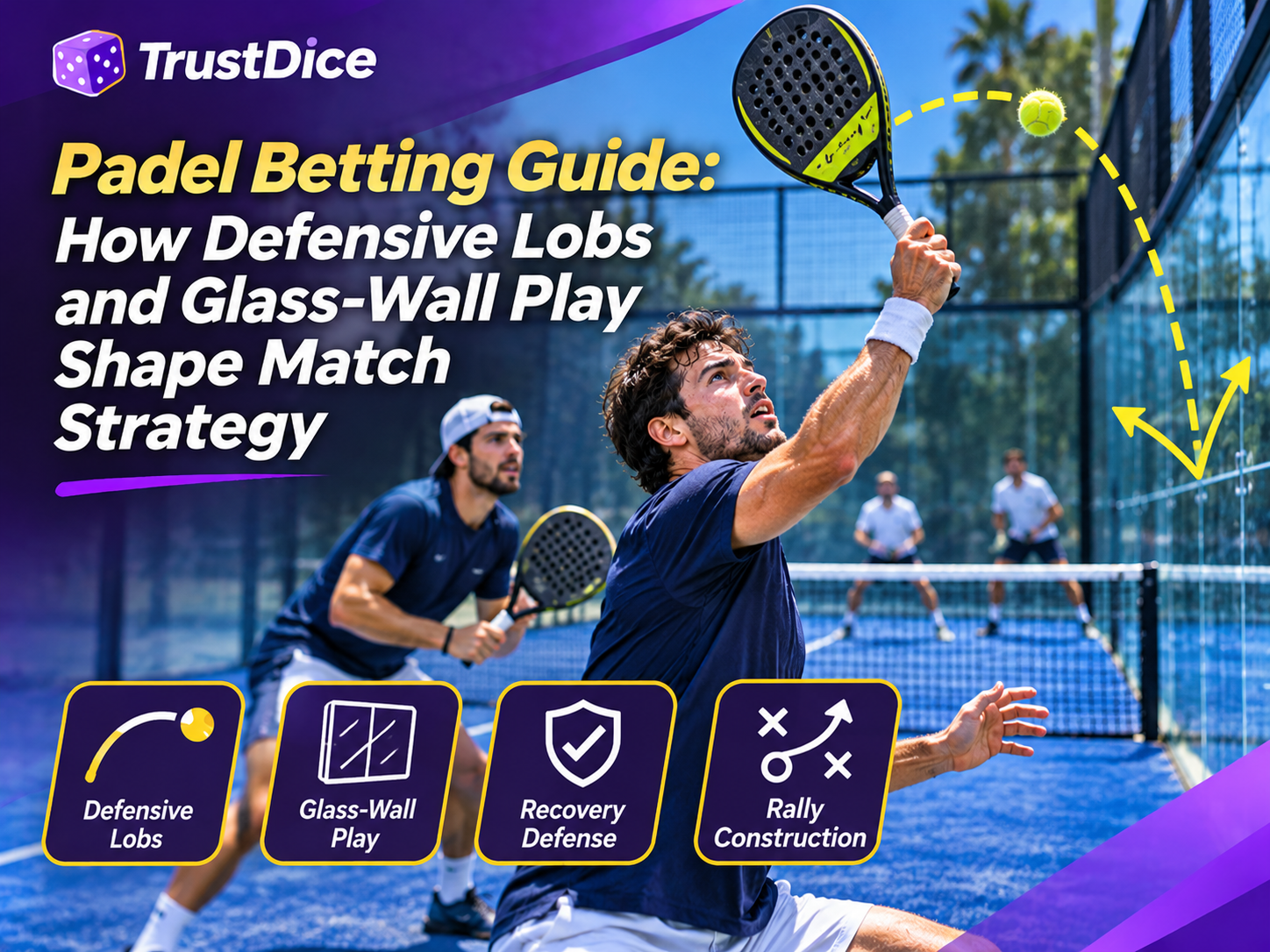
A lob sends the ball high over the opposing partnership. When sufficiently deep, it can force attacking players away from the net and provide time for defenders to advance.
However, a short lob can become dangerous because it offers opponents a comfortable overhead opportunity.
The effectiveness of a lob therefore depends on height, depth, timing, and the positioning of both partnerships.
| Lob Type | Potential Benefit | Main Risk |
|---|---|---|
| Deep Defensive Lob | Forces opponents backward | May travel beyond the baseline |
| High Neutral Lob | Creates recovery time | Can invite attacking overheads |
| Short Lob | May disrupt positioning briefly | Creates smash opportunities |
⚔️ Understanding Glass-Wall Defense
Glass walls fundamentally change how players approach defensive rallies. After a legal bounce, the ball can rebound from the surrounding walls, allowing defenders to reposition before returning it.
Successful wall defense requires anticipation rather than frantic movement. Players must judge the incoming trajectory, understand the rebound angle, and position themselves appropriately.
Back-Glass Returns
When a powerful shot reaches the back of the court, defenders may allow the ball to rebound from the glass before returning it.
This can create additional preparation time, although the rebound's speed and direction depend on the original shot.
Side-Glass Situations
Side-wall rebounds introduce additional angles. Players must understand whether the ball will move toward the center or remain close to the wall.
These situations become more demanding when opponents combine pace with spin.
🎯 Pro Tip: Watch whether defenders recover their balance before striking the ball. Controlled positioning often matters more than attempting spectacular last-second returns.
📊 Comparing Defensive Responses
Different defensive situations require different tactical choices. A deep overhead may invite a glass-assisted return, while a slower volley might allow the defender to produce a controlled lob immediately.
| Situation | Possible Response | Strategic Goal |
|---|---|---|
| Deep Overhead | Back-glass recovery | Maintain the rally |
| Controlled Volley | Defensive lob | Recover net position |
| Wide Attacking Shot | Low defensive return | Reduce opponent options |
| Repeated Net Pressure | Patient rally construction | Create a transition opportunity |
No response is universally correct. The appropriate decision depends on positioning, incoming ball quality, and partnership coordination.
🏆 How to Evaluate Defensive Partnerships
Strong defensive teams do more than retrieve difficult shots. They convert defensive exchanges into opportunities to regain control.
A partnership that repeatedly survives overheads but never escapes the back court may remain under substantial pressure.
By contrast, players who produce accurate lobs and advance together can transform defensive stability into genuine attacking opportunities.
Official competition information from the International Padel Federation and Premier Padel helps establish the context behind professional performances.
Defensive Analysis Checklist
- How consistently do defenders return powerful overheads?
- Are defensive lobs sufficiently deep?
- Does the partnership recover net position after successful defense?
- Can both players handle difficult glass rebounds?
- Do defensive errors increase under sustained pressure?
💰 Defensive Quality and Match Expectations
Defensive consistency can influence match expectations, especially against partnerships that rely on finishing points quickly.
However, in padel betting, an apparent defensive advantage should be evaluated alongside opponent quality, court conditions, and available market prices.
A team capable of retrieving spectacular smashes may still struggle against precise volleys or carefully constructed attacking sequences.
Reliable probability estimates require broader evidence than a handful of impressive defensive rallies.
⚡ Betting Insight: Successful defense does not automatically translate into winning points. Evaluate whether a partnership can convert recovery opportunities into sustained court control.
🔐 Reliable Sources and Secure Access
Research should prioritize official regulations, confirmed tournament information, and match footage. Avoid unsupported claims about defensive success percentages.
Searches involving crypto casino mirror sites may expose users to imitation websites or misleading advertisements.
Before using a trustdice mirror site, independently verify its authenticity, regional availability, and security arrangements.
Wagering involves financial risk. Establish spending limits and avoid chasing losses.
💡 Final Thoughts
Defensive lobs and glass-wall recoveries are fundamental to professional padel. They allow partnerships to survive pressure, disrupt attacking formations, and create opportunities to regain favorable court position.
The most useful analysis examines not only whether players retrieve difficult balls, but also what happens afterward.
By combining tactical observation with verified tournament information, spectators can better understand the defensive skills that shape competitive matches.