







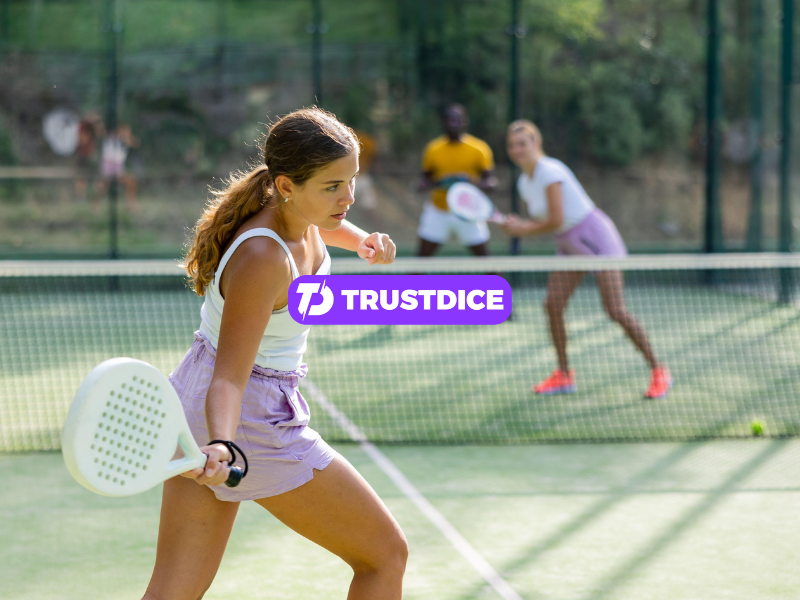
Padel balls may look almost identical to tennis balls, but choosing the wrong type can change the speed, rebound, and rhythm of an entire match. A lively ball makes smashes and glass rebounds more aggressive, while a slower ball gives players more time to defend and construct points.
The correct choice depends on player level, court conditions, temperature, altitude, and desired match speed. Brand matters less than selecting a ball whose pressure and response suit the situation.
Quick answer 🎯
Choose an FIP-approved padel ball for competitive play. Beginners usually benefit from a standard-speed ball, while experienced players may enjoy faster models. Replace balls when their bounce, pressure, felt, or consistency has noticeably deteriorated.
What Is a Padel Ball?
A padel ball is a pressurized rubber sphere covered with felt. Under the official FIP Rules of Padel, balls approved for competition must meet defined requirements covering color, diameter, weight, rebound, deformation, and internal pressure.
The standard diameter range is 6.35–6.77 centimeters, while weight must fall between 56.0 and 59.4 grams. The ball should provide clear contrast with the court surface and normally appears yellow or white.
These figures resemble tennis-ball specifications, which explains the visual similarity. However, a standard padel ball generally uses different pressure and rebound characteristics to produce a response suited to the smaller enclosed court.
Padel Ball vs Tennis Ball
A tennis ball may physically fit on a padel court, but that does not make it the correct match ball. Differences in internal pressure, construction, felt, and rebound can affect how quickly the ball travels and how it reacts after striking the glass.
A more lively tennis ball can make a padel rally unusually fast, especially in warm conditions. Overheads may rebound farther from the back glass, and defensive players may have less time to move into position.
| Feature | Padel Ball | Tennis Ball |
|---|---|---|
| Primary use | Enclosed padel court | Tennis court |
| Typical response | Controlled for padel rallies and glass rebounds | Often livelier under tennis specifications |
| Competitive approval | Must satisfy relevant padel regulations | Approved under tennis requirements |
| Interchangeable? | Designed for padel | Not the correct default for official padel |
Simple rule ⚡
If the can says “tennis” but never mentions padel approval or padel use, do not assume it will provide the intended playing experience.
How Ball Pressure Changes the Game
A sealed can maintains pressure around unused balls. Once opened, the pressure difference begins to equalize gradually, and repeated impacts also affect the rubber and felt.
A fresh, high-response ball normally travels faster and rebounds more strongly. Smashes become more dangerous, balls exit the court more easily, and glass rebounds move farther forward. Players must react earlier and control overhead power carefully.
A ball that has lost pressure feels softer and produces a weaker bounce. Rallies may become slower, but the ball can also become frustrating because players must swing harder to create depth. A slightly slower ball is not necessarily damaged; an inconsistent or clearly flat ball is.
| Ball Condition | Likely Behavior | Effect on Play |
|---|---|---|
| Fresh and fast | Lively flight and strong rebound | Favors aggressive overheads and quick reactions |
| Standard response | Balanced pace and predictable bounce | Suitable for most club matches |
| Partially worn | Slower flight and reduced rebound | Creates longer but less dynamic rallies |
| Flat or inconsistent | Weak or uneven bounce | Should be replaced for meaningful play |
Fast vs Standard Padel Balls
Some manufacturers offer standard and faster versions. Faster balls are not automatically better. They simply create a different match environment.
The HEAD Padel Pro S+, for example, is marketed for faster exchanges and uses a redesigned core and felt intended to improve durability. It may suit experienced groups wanting lively play, but beginners can find the increased pace difficult to control.
The Babolat Court X3 is a pressurized, FIP-approved padel ball positioned around speed and durability. The NOX Nerbo is another FIP-approved fast ball designed to create lively exchanges.
A standard-response option is usually the safest choice for social matches with mixed abilities. It keeps the game accessible and reduces the chance that every imperfect lob becomes an easy finishing opportunity.
How Temperature Affects Padel Balls
Warm conditions generally make pressurized balls feel faster and livelier. The rubber becomes more responsive, and the internal gas behavior contributes to a stronger bounce. On a hot day, an already fast ball can make the court feel extremely quick.
Cold conditions normally produce a slower, heavier sensation. Players may need more effort to create depth, while smashes rebound less aggressively. Some advanced groups choose a faster model in cold weather, although beginners may still prefer control.
Do not store ball cans in a hot vehicle. Excessive heat can affect pressure, rubber, felt, and adhesive. Keep unopened and opened balls in a stable, dry environment away from direct sunlight.
Why Altitude Matters
Air pressure is lower at higher altitude, changing the relationship between the ball’s internal pressure and the surrounding atmosphere. A normal ball may feel unusually lively and travel farther.
The FIP rules account for play above 500 meters by permitting an alternative ball specification with a different rebound range. Players visiting a high-altitude location should ask the club or tournament organizer which balls are normally used.
Conditions check 🧠
Ball speed is not created by the ball alone. Temperature, altitude, court surface, humidity, and ball age combine to shape the final response.
How Long Do Padel Balls Last?
There is no universal number of matches. Competitive players may open a new can frequently because consistent bounce matters. Recreational players may continue using a set while its response remains acceptable.
Playing frequency, temperature, rally intensity, court surface, storage, and ball construction all influence durability. Felt can become worn or fluffy, while internal pressure gradually decreases after the can is opened.
Compare all three balls before a match. If one rebounds noticeably lower, feels softer, or travels differently, remove it from serious play. Old balls can still serve for controlled feeding drills, but mixing them with fresh balls creates inconsistent practice.
Do Ball Pressurizers Work?
A pressurizer is a storage container designed to maintain or restore pressure around used balls. It can slow performance loss and extend useful recreational life, depending on the device, seal, ball condition, and storage duration.
It cannot repair damaged rubber or replace worn felt. If a ball is cracked, badly deformed, wet, or inconsistent, additional pressure will not return it to new condition.
How to Choose the Right Ball
| Situation | Recommended Direction | Reason |
|---|---|---|
| Beginner lesson | Standard-speed ball | Provides more reaction time |
| Mixed-level social match | Durable standard-response ball | Balances accessibility and value |
| Advanced competitive match | Fresh approved match ball | Delivers consistent performance |
| Cold, slow conditions | Standard or faster ball based on ability | Compensates for reduced liveliness |
| High altitude | Locally appropriate approved ball | Controls excessive rebound |
Balls and Professional Match Analysis
Ball selection can influence professional tactics. A lively ball may reward powerful smashers, while slower conditions can favor patient defenders. When researching a tournament through a bitcoin sportsbook, confirm the venue, altitude, weather, and official ball rather than relying only on player reputation.
Anyone exploring bitcoin betting should treat ball conditions as one part of a wider analysis that includes recent form, injuries, partnership chemistry, and opponent quality.
No ball guarantees a particular result. Verify market rules, use a fixed entertainment budget, and never chase losses through a bitcoin sportsbook.
Final Ball Checklist
- Use genuine padel balls rather than assuming tennis balls are equivalent.
- Choose FIP-approved balls for organized competition.
- Match ball speed to player ability and conditions.
- Expect warmer weather and altitude to increase liveliness.
- Store cans in a stable, dry environment.
- Keep opened balls sealed when not in use.
- Replace balls when bounce becomes weak or inconsistent.
- Use worn but safe balls for drills instead of competitive matches.
The right ball makes padel more consistent and enjoyable. Start with a standard approved model, observe how it behaves on your regular court, and adjust only when player level or conditions provide a clear reason. Freshness and suitability matter more than choosing the fastest ball on the shelf.