







Choosing a padel racket should not begin with the model used by your favorite professional player. It should begin with a simpler question: which racket helps you strike more balls cleanly during an entire match?
A suitable racket supports your current technique, physical strength, and playing style. The wrong one can feel impressive for five minutes during warm-up but become slow, uncomfortable, and unforgiving once rallies become longer. Price and professional endorsements cannot compensate for a shape, balance, or weight that does not suit your game.
Quick answer 🎯
Most beginners should start with a round, low-to-medium-balance racket with a forgiving surface and manageable weight. Intermediate players often benefit from a teardrop shape, while advanced attackers may prefer a diamond-shaped, high-balance racket. Comfort and consistent contact should come before maximum power.
What Makes a Padel Racket Different?
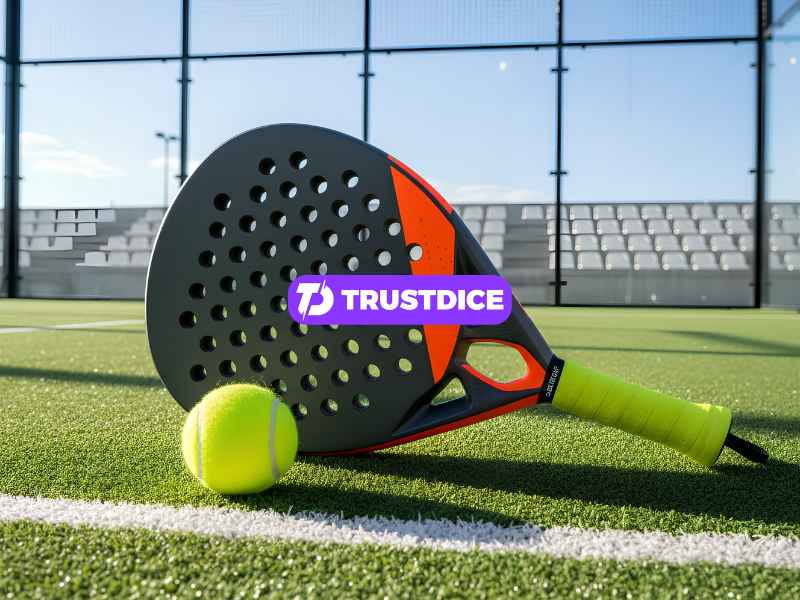
A padel racket has a solid, perforated hitting surface rather than tennis strings. Its shape, internal foam, face material, frame construction, balance point, and drilling pattern all affect how it responds at contact.
According to the official FIP Rules of Padel, a legal racket may be no longer than 45.5 centimeters, no wider than 26 centimeters, and no thicker than 38 millimeters. The combined head and handle length must remain within the maximum total length. The racket must also include a non-elastic wrist cord, which players are required to use.
Those regulations establish the outer limits, but legal rackets can still feel dramatically different. Two models with nearly identical dimensions may behave differently because one has soft foam and a flexible fiberglass face while the other uses dense foam, carbon fiber, and head-heavy balance.
Buyer reality ⚡
A racket is a collection of interacting characteristics. Never judge shape, weight, carbon rating, or price in isolation.
Start with the Three Main Racket Shapes
Padel rackets are generally classified as round, teardrop, or diamond shaped. Shape influences the location and size of the sweet spot—the area that returns the most efficient, stable response when the ball hits the face.
The classifications are useful, but they are not perfectly standardized across every manufacturer. One brand’s teardrop may look close to another brand’s hybrid diamond. Treat the label as a starting point and examine the stated balance and actual feel as well.
| Racket Shape | Typical Sweet Spot | Main Strength | Best Suited To |
|---|---|---|---|
| Round | Large and central | Control and forgiveness | Beginners, defenders, and consistency-focused players |
| Teardrop | Medium-sized and slightly above center | Combination of power and control | Intermediate and versatile players |
| Diamond | Smaller and higher on the face | Leverage and attacking power | Experienced players with reliable contact |
Round Rackets: Forgiveness and Control
A round racket normally places the sweet spot close to the center of the face. The usable hitting area tends to be generous, so slightly off-center contact is less punishing. This helps new players return more balls while developing timing.
Round models are not exclusively beginner rackets. An experienced right-side player may choose one for fast handling, defensive control, and reliable blocking at the net. A player recovering from arm discomfort may also prefer a maneuverable round model instead of a demanding head-heavy frame.
Teardrop Rackets: Balanced Performance
A teardrop racket normally moves the effective hitting area slightly higher while retaining more forgiveness than a diamond. This creates a practical middle ground for players who defend, build points, and attack when the correct opportunity appears.
Many improving players move toward this shape after establishing dependable groundstrokes and volleys. However, progression does not require changing shape. If a round racket continues to support your preferred game, there is no rule saying you must “graduate” from it.
Diamond Rackets: Attacking Leverage
A diamond racket concentrates more mass and hitting potential near the upper part of the face. When a skilled player contacts a smash cleanly, the higher sweet spot and leverage can support greater power.
The trade-off is a smaller margin for error. Defensive balls near the feet, rushed volleys, and off-center contacts may feel less stable. Players should choose this shape because their technique and attacking role justify it—not because diamond rackets are marketed as the most advanced option.
Understand Balance Before Looking at Total Weight
Balance describes how the racket’s mass is distributed. A low-balance racket carries more of its perceived weight toward the handle. A high-balance racket places more mass toward the head. Medium balance sits between those two extremes.
This explains why two rackets weighing the same on a scale can feel completely different. A 360-gram head-heavy model may feel slower and more physically demanding than a 370-gram racket with its weight closer to the hand.
| Balance | On-Court Feeling | Potential Benefit | Potential Drawback |
|---|---|---|---|
| Low | Fast and easy to position | Control, defense, and quick volleys | Less effortless leverage on overheads |
| Medium | Neutral and versatile | Balanced performance across the court | May not maximize one specific quality |
| High | Heavier through the upper face | Power, stability, and overhead leverage | Slower handling and greater physical demand |
In our player demo sessions, balance often becomes more noticeable than the number printed beside “weight.” A player may reject a racket as too heavy, then comfortably use a model that weighs several grams more because its balance sits closer to the handle.
Simple test 🧠
Hold the racket in your normal grip and make several controlled volley movements. If the head repeatedly arrives late or pulls your wrist downward, the balance may be too high for your current strength and timing.
How Heavy Should Your Padel Racket Be?
Manufacturers commonly sell adult rackets in a broad range around the mid-300 grams, although the exact options vary by product. HEAD’s official padel racket selection guide notes that beginners and intermediates often prefer approximately 340–360 grams, while many tournament and advanced players use approximately 360–375 grams.
These are guidelines rather than universal prescriptions. Body size, strength, injury history, racket balance, added grips, and playing frequency all matter. A smaller or younger player may need a lighter frame. A physically strong beginner may enjoy the stability of a slightly heavier racket if it remains easy to maneuver.
Heavier rackets can offer stability when the ball strikes away from the center. They may also help transfer momentum through volleys and smashes. However, excessive weight can make late contact even later and increase fatigue during long sessions.
A very light racket is easier to move, but lighter is not automatically safer or better. Some players squeeze the handle and swing harder to create depth, which may produce its own discomfort. The goal is the lightest or heaviest racket you can use—it is the racket you can control without strain through a full match.
Remember the Finished Playing Weight
The listed weight may not include everything you add after buying the racket. Overgrips, frame protectors, and customization tape increase total weight and may change balance.
An overgrip wrapped around the handle adds weight low on the racket and can make the frame feel more handle-biased. A protector placed around the upper edge adds weight farther from the hand and may make the head feel heavier. Small changes can become noticeable because of where the extra mass sits.
Carbon Fiber vs Fiberglass Faces
Surface material affects stiffness, response, comfort, and durability. The two most common categories are fiberglass and carbon fiber, with some rackets using blends or additional layers.
Fiberglass is generally more flexible. It can create a softer sensation and help players access ball speed without producing a perfectly fast swing. This forgiving response makes it common in entry-level and comfort-oriented rackets.
Carbon fiber is generally stiffer and more direct. It can provide greater precision and stability for players who already accelerate the racket effectively. Carbon also tends to appear in more expensive models, although a carbon label alone does not prove that a racket will perform better for you.
| Face Material | Typical Feel | Useful For | Consideration |
|---|---|---|---|
| Fiberglass | Softer and more flexible | Beginners, comfort, and accessible ball speed | May feel less precise to powerful hitters |
| Carbon fiber | Firmer and more direct | Control, stability, and developed swing speed | May feel demanding during slow or off-center contact |
| Carbon-fiberglass blend | Moderately flexible | Improving players seeking mixed performance | Behavior varies significantly by construction |
Labels such as 3K, 12K, and 18K refer to the fiber tow used in a carbon fabric, but they should not be treated as a simple quality ladder. The complete construction—including resin, layering, core, frame, and manufacturing method—determines the final response. A higher number does not automatically mean more power, comfort, or durability.
Soft Foam vs Hard Foam Cores
Inside the racket is a foam core, often described through terms such as EVA, soft EVA, multi-density EVA, or hybrid foam. Manufacturers use their own formulations and names, so comparisons are not always exact.
A softer core normally compresses more easily. It can feel comfortable during slower strokes and help produce depth without aggressive acceleration. Beginners and players who value comfort often enjoy this response.
A firmer core normally feels more direct and may remain more predictable during fast swings. Advanced players who generate their own racket speed often prefer this control, particularly during volleys and attacking overheads.
Temperature can change the perceived response. Warm conditions may make some cores feel softer and more lively, while cold conditions can make the same racket feel firmer. This is one reason a short store test cannot fully replace playing a complete match in familiar conditions.
Does a Rough Surface Create More Spin?
Many rackets include a textured or sand-like face intended to assist spin. Texture can contribute to the interaction between the ball and racket, but it cannot replace swing path, contact quality, and timing.
A player with a reliable slicing motion may notice extra bite on bandejas and víboras. A beginner striking the ball flat will not suddenly produce professional-level spin simply because the surface feels rough.
Texture also varies in durability. Molded patterns are part of the face construction, while some sand-like finishes may gradually wear with use. Before paying a large premium, ask whether spin is already a meaningful part of your game.
Match the Racket to Your Actual Level
Players frequently buy for the player they hope to become instead of the player stepping onto the court today. A demanding professional-style racket may offer theoretical power but reduce practical performance if you regularly miss its sweet spot.
| Player Profile | Useful Starting Specification | Main Priority |
|---|---|---|
| New beginner | Round shape, low or medium balance, forgiving face | Clean contact and confidence |
| Improving all-court player | Round or teardrop shape, medium balance | Versatility and controlled progression |
| Control-focused defender | Round shape, low-to-medium balance | Handling, blocks, and defensive recovery |
| Experienced attacker | Teardrop or diamond shape, medium-to-high balance | Overhead leverage and finishing power |
| Player managing discomfort | Comfortable weight, manageable balance, softer response | Reduced strain and sustainable technique |
If you experience recurring wrist, elbow, or shoulder pain, equipment advice is not a diagnosis. Stop playing through worsening pain and consult a qualified medical professional. Technique, training load, grip tension, and recovery may matter as much as the racket.
How to Demo a Padel Racket Properly
A useful demo should last longer than several smashes. Begin with slow volleys and controlled groundstrokes. Check whether the racket remains stable during off-center contact and whether you can position it quickly when defending close to the glass.
Next, test serves, bandejas, víboras, lobs, and overheads. Power is relevant, but pay equal attention to depth control. A racket that launches every defensive lob beyond the back glass is not helping, even if its smashes feel exciting.
Finish with competitive points. Pressure exposes handling problems that cooperative feeding can hide. If possible, use the racket for an entire 60- or 90-minute session and record how your arm feels near the end.
Demo scorecard 🏆
Rate comfort, defensive handling, volley stability, overhead control, sweet-spot forgiveness, and late-match fatigue from one to five. Choose the best total performer—not merely the racket that produced your hardest smash.
Seven Common Racket-Buying Mistakes
1. Copying a Professional Player
Professional players have exceptional timing, conditioning, and customized equipment. The retail model carrying a player’s name may also differ from the exact setup used in competition.
2. Assuming Expensive Means Suitable
Premium construction can offer excellent performance, but a stiff, head-heavy racket may slow a beginner’s development. Suitability creates value; price does not create suitability.
3. Looking Only at Shape
A round racket can still feel demanding if it is heavy and unusually balanced. Consider shape, balance, weight, face, and core together.
4. Buying the Lightest Option Automatically
Very light rackets offer maneuverability but may lack the stability some adult players need. Test rather than relying on a single number.
5. Ignoring Grip Setup
A grip that feels too narrow may cause unnecessary squeezing. A grip that is built excessively thick may limit control. Experiment with overgrips while monitoring the added weight.
6. Testing Only Attacking Shots
Most recreational points include more ordinary volleys, blocks, lobs, and defensive contacts than perfect smash opportunities. Test the shots you actually play.
7. Expecting Equipment to Repair Technique
A new racket may improve comfort or match your style more closely, but it cannot fix late preparation, poor spacing, or incorrect shot selection.
Equipment and Professional Match Analysis
Professional racket partnerships attract attention, but equipment alone rarely explains a match result. When researching players through a bitcoin sportsbook, focus on current form, partnership chemistry, court conditions, fitness, and tactical matchups before a racket endorsement.
A hard, fast court may reward aggressive overheads, while slower conditions can place greater value on control and patient construction. Anyone considering bitcoin betting should treat equipment information as minor context rather than proof that one player holds a decisive advantage.
Padel remains unpredictable, and no racket guarantees a tournament result. Verify market rules, use a fixed entertainment budget, and never chase a loss through a bitcoin sportsbook.
Final Padel Racket Checklist
- Choose a shape that matches your current consistency and playing style.
- Evaluate balance as carefully as total weight.
- Prioritize a sweet spot you can find during pressured rallies.
- Select fiberglass, carbon, or a blend according to feel—not marketing status.
- Match core firmness to your swing speed and comfort preference.
- Include overgrips and protectors when considering finished weight.
- Test volleys, defense, lobs, and overheads during a demo.
- Play long enough to evaluate fatigue.
- Do not buy a professional racket simply because a professional uses it.
- Choose repeatable control before occasional maximum power.
The best padel racket is not the most advanced, expensive, or aggressively shaped model available. It is the one that reaches the ball on time, feels stable during ordinary contact, and allows you to maintain sound technique from the first game to the last.
Start with shape, then examine balance, weight, face material, and core response. Demo several options under real playing conditions whenever possible. When your racket supports the shots you already understand while leaving room for improvement, you have found equipment that can genuinely help your game.