







Padel and tennis look like close relatives. Both use rackets, a net, familiar scoring, and yellow balls. But once you step onto a padel court, the similarities quickly give way to a very different game.
From the glass walls to the underhand serve, padel rewards different skills and tactical decisions. If you already play tennis—or you are simply deciding which sport to try—these 10 differences explain what really separates them.
1. Padel Courts Are Smaller
A standard padel court measures 20 meters long and 10 meters wide. A tennis court is considerably larger, particularly when comparing the amount of open space players must cover.
The smaller dimensions make padel feel immediately accessible, but do not confuse smaller with easier. With four players sharing the court, reaction time can become extremely short during fast exchanges at the net.
2. Padel Uses Glass Walls
This is the biggest visual and tactical difference.
Padel courts are enclosed by glass walls and fencing. After the ball bounces on your side, it can rebound from the glass and remain playable.
In tennis, a shot that passes you is usually finished. In padel, you may deliberately allow that same ball to travel past you, rebound from the back glass, and then return it.
Beginner Tip 🎯
Tennis players often struggle because they attack every ball before it reaches the wall. Give yourself time. Learning to trust the glass is one of the fastest ways to improve at padel.
3. The Rackets Are Completely Different
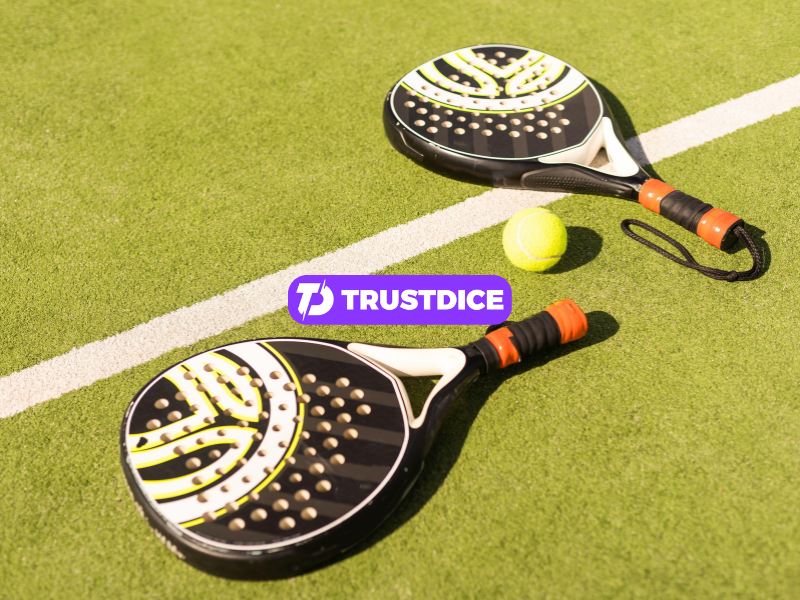
Tennis rackets have strings. Padel rackets use a solid hitting surface containing holes.
They are also shorter and more compact. Depending on their shape and balance, padel rackets can emphasize control, power, or a combination of both.
Beginners generally benefit from a forgiving racket with manageable weight rather than immediately choosing an aggressive power-focused model.
4. Padel Is Primarily a Doubles Sport
Singles tennis is central to professional and recreational tennis. Standard padel, however, is designed around two-player teams.
This makes communication extremely important. Partners need to move together, cover the middle intelligently, and decide who should take difficult balls.
You are not simply playing your own game next to another person. Your positioning affects your partner on virtually every point.
| Feature | Padel | Tennis |
|---|---|---|
| Main Format | Doubles | Singles & Doubles |
| Racket | Solid | Strung |
| Serve | Underhand | Overhead |
| Walls | Playable | None |
5. The Serve Is Easier to Learn
A tennis serve is a complex overhead movement that can take considerable practice to develop. Padel uses an underhand serve.
The server bounces the ball behind the service line and strikes it at or below the permitted height, sending it diagonally into the opposite service box.
This reduces one of the biggest technical barriers facing new racket-sport players. However, advanced padel serving still requires good placement, spin, and tactical planning.
6. Raw Power Matters Less
Power is useful in both sports, but padel punishes players who rely on it without control.
Because the back wall can return hard shots to defenders, smashing the ball harder does not automatically end the rally. Poorly selected power shots may even give opponents an easier rebound.
🏆 On-Court Lesson: In beginner and intermediate matches, the player who keeps forcing one extra return often beats the player trying to produce a highlight on every shot.
7. Net Control Is Crucial in Padel
Tennis players can win from different court positions depending on their style. In padel, controlling the net is a fundamental tactical objective.
Teams at the net can volley, attack angles, and reduce their opponents' reaction time. The defending pair often responds with a lob, attempting to push the attackers backward and take the net themselves.
Professional rallies constantly revolve around this battle for position.
8. The Ball Behaves Differently
Padel balls look extremely similar to tennis balls, but official specifications differ. More importantly, the enclosed court changes how players perceive ball speed.
You are not judging only the first bounce. You may need to predict the bounce, the contact with the glass, and the direction of the resulting rebound.
That makes reading trajectories a core padel skill.
9. Padel Is Generally Easier for Beginners
Most beginners can participate in basic padel rallies relatively quickly. The underhand serve is accessible, the court is compact, and doubles play reduces the amount of space each individual must cover.
Tennis usually demands more technical development before two complete beginners can sustain longer rallies.
However, padel's accessible entry level hides considerable tactical depth. Advanced players must master glass defense, lobs, volleys, overheads, transitions, and coordinated movement.
10. Watching the Two Sports Requires Different Knowledge
In tennis, viewers often focus on serve quality, baseline exchanges, winners, and unforced errors. Padel requires additional attention to net control, partner positioning, glass defense, and overhead selection.
That distinction matters for spectators as well. Someone following racket sports through a bitcoin sportsbook will get more from a padel match by watching which pair consistently controls the net rather than judging players purely by powerful shots.
| Skill | Importance in Padel |
|---|---|
| Team Positioning | Very High |
| Glass Reading | Very High |
| Net Play | Very High |
| Raw Power | Situational |
Can Tennis Players Become Good at Padel?
Absolutely. Tennis experience provides useful racket control, volleys, footwork, and an understanding of angles. The problem appears when experienced tennis players refuse to adapt.
From our court experience, the biggest adjustment is patience. Tennis instincts encourage players to take balls early. Padel sometimes rewards exactly the opposite: step back, wait for the glass, and create a better return.
Likewise, spectators interested in bitcoin betting should avoid evaluating padel players as if they were tennis players. Tactical compatibility between partners can matter just as much as individual shot-making.
Which Sport Should You Try?
If you love individual competition, powerful serving, and large-court movement, tennis may suit you better. If you prefer teamwork, long tactical rallies, quick net exchanges, and a more social doubles environment, padel is extremely appealing.
You do not need to choose only one. Tennis players can use padel to develop volleys and reactions, while padel players can learn plenty from tennis technique.
For sports fans exploring new competitions through a bitcoin sportsbook, understanding these differences also makes professional padel far easier to analyze.
Final Thoughts
Padel is not simply “tennis on a smaller court.” The glass walls, solid rackets, underhand serve, doubles structure, and constant fight for net position create a distinct sport.
Tennis experience certainly helps, but successful padel requires new instincts. Learn to use the walls, move with your partner, control the net, and choose placement before power.
Once those concepts click, the difference between padel and tennis becomes impossible to miss. 🎾