








If you have recently seen a compact tennis-like court surrounded by glass walls, you were probably looking at padel. The sport has expanded far beyond its traditional strongholds in Spain and Latin America, with new clubs, professional tournaments, and recreational players appearing across Europe, the Middle East, Asia, Africa, and North America.
At first glance, padel looks like miniature tennis. Spend ten minutes on court, however, and the differences become obvious. The walls are part of the game, players normally compete in doubles, the rackets have no strings, and positioning often matters more than raw power.
For new players, that combination is exactly what makes the sport so addictive. In our recreational sessions with tennis newcomers, complete beginners can often participate in meaningful rallies surprisingly quickly. You do not need a 120 mph serve or years of technical training before the game becomes fun.
What Exactly Is Padel?
Padel is a racket sport normally played by four players divided into two teams. It combines elements familiar from tennis and squash while creating its own tactical system.
The court is smaller than a traditional tennis court and is enclosed by walls and fencing. Unlike tennis, those walls are not simply boundaries. After the ball bounces on your side of the court, it can rebound from the glass and remain in play.
That single mechanic completely changes the rhythm of a rally.
A ball that would be an obvious winner in tennis may become defendable in padel because the receiving player can wait for the rebound and return it. Experienced players therefore learn to think in angles, rebounds, positioning, and controlled pressure rather than simply trying to hit harder.
Beginner Tip 🎯
Do not treat the glass as your enemy. New players often panic when the ball passes them. Sometimes the correct decision is to let it bounce, allow the glass to slow it down, and then play the return.
Padel vs Tennis: The Basic Differences
Padel and tennis share several familiar concepts. Both involve serving diagonally, hitting the ball across a net, playing volleys, and using a similar scoring structure. The actual experience on court is nevertheless very different.
| Feature | Padel | Tennis |
|---|---|---|
| Typical Format | Doubles | Singles or doubles |
| Racket | Solid racket with holes | Strung racket |
| Serve | Underhand after a bounce | Overhead |
| Walls | Part of normal play | Not used |
| Court Size | Smaller enclosed court | Larger open court |
The easier serve is particularly important for beginners. Tennis players can spend months developing a reliable overhead serve. Padel removes much of that initial technical barrier because the server first bounces the ball and strikes it below waist height.
That does not mean serving is unimportant. Placement, spin, and the next shot become increasingly important at higher levels. But getting the ball into play is significantly less intimidating for someone holding a racket for the first time.
How Big Is a Padel Court?
A standard padel court measures 20 meters long and 10 meters wide. A net divides the playing area in half, while glass walls and metallic fencing surround the court.
The enclosed structure creates the distinctive tactical identity of padel. Players must understand not only where the ball will bounce on the floor, but also what will happen after it reaches the glass.
Beginners commonly make the mistake of standing too close to the back wall. That reduces reaction time and makes rebounds difficult to judge. Giving yourself space allows the ball to travel through its natural path before you make contact.
How Does Padel Scoring Work?
Traditional padel scoring will feel immediately familiar to anyone who understands tennis. Points normally progress through 15, 30, 40, and game, with games forming sets.
| Situation | What Happens |
|---|---|
| First point won | 15 |
| Second point won | 30 |
| Third point won | 40 |
| Game-winning point | Game, subject to the competition format |
| Typical set target | Six games with the required margin |
Competition formats can vary, particularly regarding deciding points and tiebreak procedures, so players entering organized events should check the specific tournament regulations.
How Do You Serve in Padel?
The serve is one of the most beginner-friendly parts of the sport.
You stand behind the service line, bounce the ball, and strike it underhand at or below the permitted height before sending it diagonally into your opponent's service box. As in tennis, you receive two attempts.
New players frequently try to make the serve too aggressive. That is rarely necessary. A consistent serve that forces the receiver into an uncomfortable position is more valuable than attempting an unnecessary winner.
🏆 From the Court: At recreational level, consistency wins an enormous number of points. Put the serve in, move toward the net with your partner, and make the opposing team produce the difficult shot.
Why Is Net Position So Important?
If there is one tactical concept every beginner should learn early, it is this: controlling the net is usually better than remaining at the back of the court.
From the net, players can volley before the ball bounces, reduce their opponents' reaction time, and create sharper attacking angles. The defending team, meanwhile, often tries to use lobs to push the attackers away from the net.
This produces one of padel's fundamental tactical battles:
Attackers want to keep the net. Defenders want to regain it.
Watch experienced players and you will constantly see teams moving forward and backward together. Individual brilliance helps, but coordinated positioning is often more important.
This strategic layer also makes professional matches interesting for spectators who enjoy analyzing performance or following sports through a bitcoin sportsbook. Understanding which pair controls the net can tell you far more about a match than simply counting spectacular smashes.
What Equipment Do You Need?
You do not need much equipment to start playing.
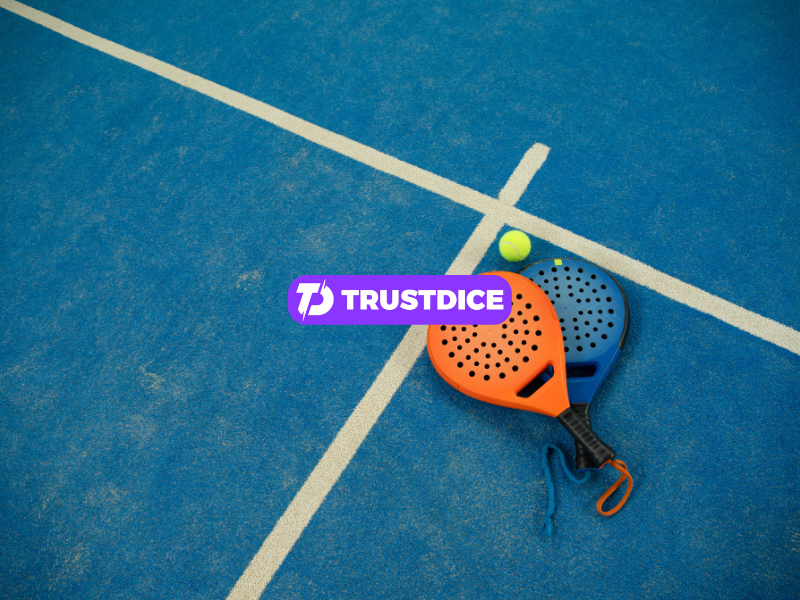
Padel Racket
A padel racket is solid rather than strung and contains multiple holes across its hitting surface. Rackets come in different shapes, weights, balances, and materials.
Beginners generally benefit from something comfortable and forgiving rather than an extremely head-heavy attacking model. Control is far more useful when you are still learning timing and rebound behavior.
Padel Balls
Padel balls resemble tennis balls but are manufactured according to specifications designed for the sport. To a new player they may look almost identical, but their playing characteristics differ.
Shoes
Proper court shoes provide grip when changing direction and moving toward the net. You do not necessarily need the most expensive model available, but running shoes designed primarily for straight-line movement are not ideal for repeated lateral cuts.
Is Padel Easy to Learn?
Padel is relatively accessible, but becoming genuinely good at it is another matter.
A beginner can often serve, rally, and enjoy a competitive game during the first few sessions. At advanced levels, however, the sport becomes highly tactical. Players must master lobs, volleys, defensive rebounds, overhead shots, positioning, communication, and transitions between attack and defense.
The wall mechanics create an especially interesting learning curve. Initially, rebounds feel chaotic. After enough matches, players start predicting them automatically.
That is when padel becomes much more interesting.
Pro Tip ⚔️
Your first objective should not be learning spectacular smashes. Learn how to defend the back glass, play a controlled lob, volley safely, and move with your partner. Those four skills will improve your results much faster.
Why Has Padel Become So Popular?
Several characteristics help explain its appeal. Matches are social because four people normally share the court. Rallies can develop quickly even between inexperienced players. The smaller playing area reduces the amount of pure court coverage required, while the walls keep many points alive that would immediately end in tennis.
There is also a strong spectator component. Long defensive exchanges can suddenly turn into aggressive net battles, overhead attacks, or dramatic glass rebounds.
Professional infrastructure continues to expand as well. The International Padel Federation is the sport's global governing body, while Qatar Airways Premier Padel operates the leading official professional tour. According to the official 2026 Premier Padel calendar announcement, the season includes 26 tournaments across 18 countries.
That international schedule gives new audiences more opportunities to watch elite players and understand how the sport looks at its highest level. For followers who also explore bitcoin betting, professional padel adds another sport where tactical knowledge can make watching matches more engaging.
What Should Beginners Focus on First?
Forget highlight-reel shots during your first few matches. The fastest route to improvement is building reliable fundamentals.
Start by keeping the ball in play. Then learn where to stand. Practice moving forward with your partner instead of having one player at the net and the other stranded near the back wall.
Next, become comfortable letting the ball reach the glass. This feels unnatural if you come from tennis, because your instinct tells you to hit every ball before it passes your body. In padel, waiting can be the technically correct decision.
Finally, develop your lob. It may not look glamorous, but a good lob is one of the most useful shots in the sport. It pushes opponents away from the net and gives your team an opportunity to move forward.
Watching Professional Padel Helps
One of the easiest ways to understand positioning is to watch professional doubles rather than focusing exclusively on individual shots.
Notice how closely partners move together. Watch how quickly both players advance after a good lob. Pay attention to how defenders use the glass instead of desperately attacking every incoming ball.
If you are watching through a sports platform or following markets on a bitcoin sportsbook, those tactical details provide useful context for understanding why momentum changes during a match. A pair that repeatedly loses net position may be under much more pressure than the scoreboard initially suggests.
Final Thoughts
Padel is easy to recognize but surprisingly difficult to compare directly with another racket sport. It borrows familiar ideas from tennis, adds the enclosed-court dynamics associated with wall-based sports, and then builds a tactical doubles game around positioning and teamwork.
That combination explains much of its attraction. Beginners can start rallying without mastering an intimidating serve, while experienced competitors can spend years improving court movement, defensive reads, overhead selection, and partnership chemistry.
If you are completely new, your first session should be simple: find three other players, use a beginner-friendly racket, learn the underhand serve, and resist the temptation to attack every ball. Give yourself time to understand the glass.
Once the rebound stops feeling strange, you begin to see what makes padel different. The court gets smaller tactically, rallies become more predictable, and the game transforms from chaotic racket swinging into a battle for angles, space, and net control.
That is where the real fun starts. 🎯