






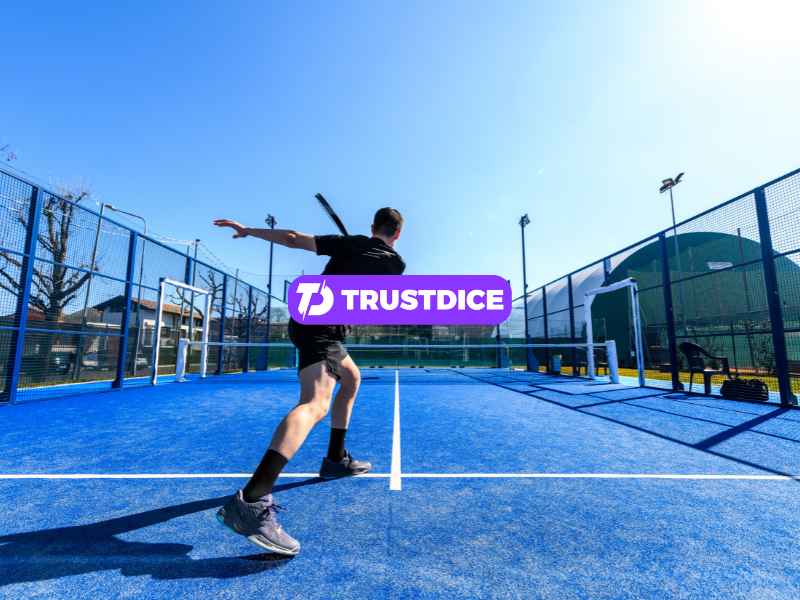
Good padel positioning is less about finding one perfect spot and more about moving with your partner. A pair that stays connected can control the middle, protect the corners, and recover after difficult shots. Two individually talented players who move independently often leave obvious gaps.
The basic pattern is simple: defend together near the back of the court, attack together near the net, and avoid becoming trapped with one player forward and the other behind. Once beginners understand that shared movement, padel becomes noticeably calmer and more predictable.
Quick answer 🎯
Imagine an invisible rope connecting you to your partner. When one player moves forward, backward, or sideways, the other adjusts in the same direction while maintaining enough space to cover the court.
The Two Main Positions in Padel
Most rallies move between two recognizable formations: a defensive position near the back glass and an attacking position near the net. The space between those areas is commonly called the transition zone.
The transition zone is not automatically forbidden, but it is uncomfortable. Balls frequently arrive around the feet, making clean volleys difficult. Unless you are moving through it with a clear purpose, avoid standing there and waiting for the opponents to attack.
| Team Position | Primary Objective | Best Shot Choices | Main Risk |
|---|---|---|---|
| Back-court defense | Absorb pressure and regain the net | Lob, low drive, controlled wall return | Standing too close to the glass |
| Net attack | Reduce opponents’ reaction time | Volley, bandeja, controlled smash | Crowding the net and losing to a lob |
| Transition zone | Move between defense and attack | Low volley, half-volley, neutral ball | Receiving shots around the feet |
Where Should You Stand When Defending?
A practical starting position is near the service line and slightly in front of the back glass. You need enough distance behind you to let the ball rebound, but you should not retreat so far that your racket or body becomes crowded against the wall.
Your exact position changes with the incoming shot. Move backward when the opponents prepare a deep overhead. Step forward when the ball is short or slow. Shift sideways with your partner as the opponents move the ball across the court.
Do not divide the court into two rigid rectangles and promise never to cross the center. Each player has a natural side, but the middle belongs to both partners. Communication and forehand preference usually determine who takes a ball passing between them.
Common beginner mistake ⚡
Standing directly on the baseline works poorly in padel. It leaves too little room for a back-glass rebound and encourages rushed contact behind the body.
How the Defensive Pair Should Move
Defensive movement resembles a sliding unit. If an opponent attacks toward your right corner, the right-side defender covers the line and glass while the partner shifts toward the middle. This closes the central gap without abandoning the opposite half completely.
If the ball travels to the other side, both players slide across. The off-ball partner should not remain frozen beside the opposite glass. From that isolated position, they cannot help with a middle ball or react efficiently to a deflection.
In our beginner drills, we often remove the rackets and ask both players to shadow the ball together. That simple exercise exposes spacing problems immediately. If the pair cannot move together without hitting a shot, adding rackets and glass rebounds will not repair the pattern.
Where Should You Stand at the Net?
At the net, stand close enough to attack but far enough back to react to a lob. For many recreational players, approximately two to three meters from the net is a useful starting reference. This is not an official measurement or a fixed rule; it changes with speed, opponent quality, and individual mobility.
Move closer when the opponents contact the ball from a low or uncomfortable position because a strong lob or passing shot becomes more difficult. Give yourself additional depth when they prepare comfortably beneath the ball and can choose between a lob and a fast drive.
The 2026 FIP Rules of Padel define the legal court and playing procedures, but tactical positioning remains situational. Players must continually read contact height, racket preparation, balance, and available angles.
Close the Middle Without Exposing the Line
The center of the court deserves special attention because a ball played through the middle can create uncertainty between partners. At the net, both players should angle their position toward the opponent making contact.
When the opponent hits from one corner, the player directly opposite protects the line and nearby angle. The partner shifts toward the center to reduce the largest open space. The pair creates a compact diagonal formation rather than standing parallel regardless of the ball.
Do not overprotect the sideline. A narrow line shot is harder to execute and carries greater risk than a ball through a large central gap. Make opponents earn the difficult winner instead of gifting them the easiest route.
Positioning cue 🧠
The player closest to the ball applies pressure. The partner protects the middle. Both players adjust before the opponent makes contact—not after the ball has already crossed the net.
Moving Forward After a Serve
The server begins behind the service line, but the serving team normally wants to establish an attacking formation. After serving, move forward under control and join your partner near the net.
A slow, accurate serve often supports this movement better than a reckless first ball. If you serve at maximum speed while losing balance, the return may reach your feet before you complete the transition.
The server’s partner starts near the net and should read the return rather than chasing an immediate winner. A controlled first volley can hold the attacking position, force another defensive contact, and create a better opportunity on the following ball.
| Situation | Recommended Team Movement | Simple Tactical Goal |
|---|---|---|
| After serving | Server advances to join the partner | Establish two-player net control |
| After returning | Returner begins deep and advances only when safe | Neutralize the serving pair |
| After a strong lob | Both players advance together | Take over the net |
| When opponents lob | Communicate and retreat as a coordinated pair | Prevent an open court behind the team |
Positioning After the Return of Serve
The receiver must allow the serve to bounce before returning it. The receiving pair therefore usually begins in a defensive formation rather than trying to copy the serving team’s net position.
A low return toward the server’s feet can make the next volley uncomfortable. A lob can push both opponents away from the net, although a short lob gives them an easy overhead. Choose enough height and depth to clear the attackers safely.
Do not automatically sprint forward after every return. Advance when your shot has created time or forced the opponents backward. If the return sits up invitingly, remain prepared to defend the next attack near the back of the court.
When Should Both Players Advance?
The safest moment to advance is after a deep lob that sends the opposing pair behind the service line. Both partners should recognize the opportunity and move together. If only one advances, the opponents can play into the large gap between the two players.
A weak or short reply may also create an attacking transition. Watch the opponents’ body position: contact below knee height, a late swing, or a player trapped near the back glass often signals that an aggressive reply is unlikely.
Move quickly but arrive under control. Charging forward without using adjustment steps can leave you unable to react to a ball directed at your body or feet.
How to Retreat Against a Lob
Running backward while staring upward is dangerous and inefficient. Turn sideways, move with crossover steps, and communicate immediately. Use short calls such as “mine,” “yours,” “leave,” or “back” before both players chase the same ball.
The player under the lob may choose an overhead if contact remains comfortable. If the ball travels beyond an effective hitting point, allow it to bounce and use the back glass. Trying to smash every lob usually creates more errors than winners.
The partner without the ball should retreat as well. Remaining at the net exposes that player to a direct passing shot and splits the formation. Even when one partner handles the overhead, both players must prepare for the next phase.
Who Covers the Middle?
There is no universal answer, but the player whose forehand faces the center often has a natural advantage on high middle balls. In a common right-handed pairing, the left-side player can cover many central overheads with a forehand.
That does not give one player permanent ownership of every middle ball. Position, preparation, height, and momentum matter. Agree on priorities before the match and use clear verbal calls during rallies.
Silence creates hesitation. Two players reaching for the same ball is inconvenient; neither player reaching for it is worse. A loud early call removes doubt and allows the partner to prepare for the following shot.
Positioning Clues When Watching Professional Padel
Professional pairs constantly adjust their formation according to the ball rather than occupying fixed dots. Watch the off-ball player during a rally. Their movement often explains how the attacking team closes space or how the defensive team survives pressure.
Left-right compatibility, communication, overhead coverage, and success at regaining the net can provide useful context when studying an event through a bitcoin sportsbook. A pair containing two excellent individuals may still struggle if both want the same space or fail to retreat together.
Conditions also influence positioning. Faster courts can reward deeper starting positions and quicker retreats, while slower conditions may allow attackers to hold the net more aggressively. Anyone considering bitcoin betting should combine tactical observations with recent form, partnership history, fitness, and competition format.
No formation removes uncertainty from sport. Use a fixed entertainment budget, avoid chasing losses, and treat information from a bitcoin sportsbook as one research input rather than a promise of a result.
A Simple Positioning Drill for Beginners
Begin with both partners near the back court while a coach or another pair feeds controlled balls. After every shot, recover toward a connected defensive formation. When a sufficiently deep lob forces the feeders backward, both players advance and attempt to maintain the net.
If the feeders regain control with their own lob, both defenders retreat together and restart. The objective is not to win quickly. It is to recognize which team owns the net and move between formations without leaving one partner behind.
Add verbal calls during the drill. Announce middle balls, lobs, switches, and uncertain rebounds. Communication should become automatic before match pressure makes decisions faster.
Final Positioning Checklist
- Defend with enough room between your body and the back glass.
- Shift sideways with your partner instead of guarding a rigid personal box.
- Advance together after a deep lob or another clearly weak reply.
- At the net, follow the ball and protect the middle as a pair.
- Retreat sideways against good lobs instead of running backward.
- Use early, simple calls to decide who covers middle balls.
- Avoid remaining in the transition zone without a tactical reason.
Strong padel positioning does not require memorizing dozens of coordinates. Start with one principle: the pair moves as a unit. Stay connected in defense, claim the net together, and retreat together when opponents regain control.
That discipline reduces open gaps and makes every shot easier to anticipate. Once your team movement becomes automatic, you can focus on placement, spin, and tactical variation instead of constantly wondering where you are supposed to stand.