







Padel is a doubles sport, but having two talented players on the same side does not automatically create a successful partnership. Communication, court coverage, tactical compatibility, and decision-making all influence how effectively a team performs under pressure.
Professional matches regularly demonstrate that coordination can matter as much as individual shot-making ability. A partnership that moves together and understands its tactical responsibilities may challenge opponents with stronger individual reputations.
For spectators interested in padel betting, understanding partnership dynamics provides valuable context beyond rankings, recent scores, and individual highlights.
🤝 Why Team Chemistry Matters in Professional Padel
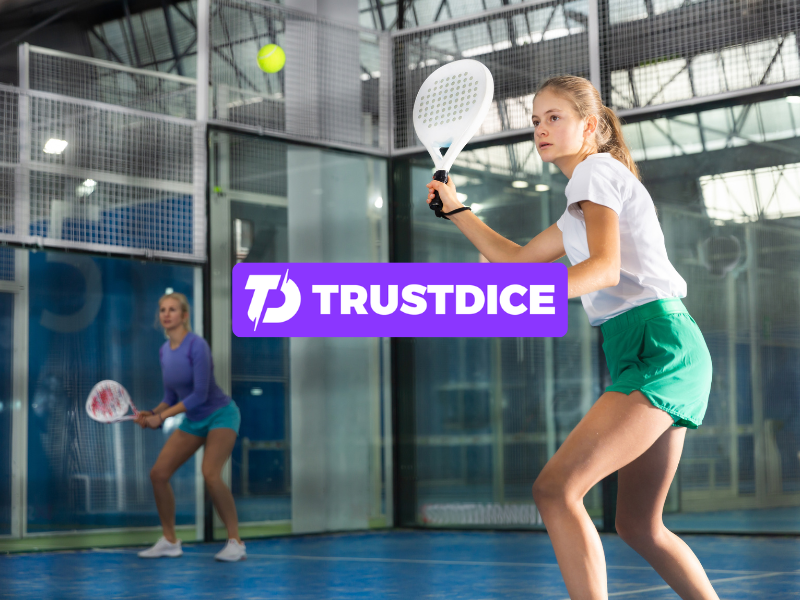
Unlike singles tennis, padel requires two players to coordinate almost every movement. Partners must defend together, advance toward the net together, and communicate whenever a ball enters an uncertain area.
Good chemistry does not simply mean that teammates get along. It involves predictable movement, complementary strengths, and confidence in shared tactical decisions.
When one player advances while the other remains deep, opponents can exploit the resulting gaps. Similarly, hesitation over who should retrieve a central ball can turn a manageable rally into an unforced error.
Four Elements of Effective Partnerships
- Communication: Clear calls reduce confusion during lobs and defensive recoveries.
- Positioning: Coordinated movement protects vulnerable spaces between partners.
- Shot selection: Players understand when to attack and when to maintain control.
- Adaptability: Both partners adjust their approach when opponents change tactics.
These qualities become particularly important during long rallies, when fatigue and pressure can expose small coordination problems.
🎯 Tactical Insight: Watch how partners react after losing a difficult point. Constructive communication and immediate positional adjustments provide more useful information than emotional reactions alone.
⚔️ Understanding Left-Side and Right-Side Responsibilities
Most professional partnerships establish relatively consistent court-side responsibilities. However, their exact tactical roles depend on handedness, strengths, and preferred playing patterns.
The left-side player is frequently associated with aggressive overhead opportunities, particularly in conventional right-handed partnerships. The right-side player often contributes through controlled construction, defensive stability, and tactical placement.
These are tendencies, not universal rules. Left-handed players and unconventional pairings can change how responsibilities are distributed.
Comparing Common Partnership Roles
| Responsibility | Left-Side Tendency | Right-Side Tendency |
|---|---|---|
| Attacking | Frequent overhead involvement | Controlled attacking construction |
| Defense | Covering cross-court pressure | Maintaining defensive consistency |
| Net Play | Aggressive interceptions | Placement and positional control |
| Communication | Coordinating central coverage | Supporting shared movement decisions |
The most effective teams distribute these responsibilities according to actual abilities rather than rigid assumptions. A technically versatile right-side player can be just as decisive as an aggressive left-side partner.
🔄 How Partnership Changes Affect Performance
Professional padel partnerships sometimes change because of competitive objectives, scheduling decisions, or differences in tactical preferences.
A new pairing may combine exceptional individual skills but still require time to develop consistent movement patterns and communication.
Consider two hypothetical players. One prefers aggressive net exchanges, while the other builds points through patient defensive rallies. Both approaches can succeed independently, but combining them requires agreement about when to advance and when to reset.
Without that understanding, the pair may surrender advantageous positions despite possessing excellent technical ability.
Established Versus Newly Formed Partnerships
| Factor | Established Pair | New Pair |
|---|---|---|
| Communication | Potentially familiar patterns | Developing shared routines |
| Court Coverage | Practiced positional coordination | May require adjustment |
| Tactical Flexibility | Established strategic options | Opportunity for new combinations |
| Predictability | More historical evidence available | Greater analytical uncertainty |
These comparisons describe possible characteristics rather than guaranteed outcomes. Some newly formed partnerships develop strong coordination immediately, while experienced pairs can experience tactical disagreements.
Official information from the International Padel Federation and Premier Padel can help analysts verify player participation, tournament draws, and partnership changes.
📊 Evaluating Team Chemistry During Live Matches
Team chemistry becomes visible through repeated decisions rather than isolated moments. One miscommunication does not establish that a partnership is dysfunctional.
Instead, observe how the team responds across multiple games. Strong partnerships often demonstrate coordinated transitions between defense and attack, especially when opponents target the space between players.
Practical Observation Checklist
- Do both players advance toward the net at appropriate moments?
- Are central balls handled confidently without repeated hesitation?
- Does one player consistently cover an excessive amount of court?
- Can the partnership adjust when opponents target a specific weakness?
- Do tactical adjustments improve performance over several games?
For padel betting analysis, these observations can complement verified match records and pre-match expectations.
For example, a partnership may lose several early games because opponents repeatedly exploit central positioning. If the players subsequently adjust their coverage and begin controlling rallies, that change provides meaningful tactical information.
However, improved coordination does not guarantee a comeback. Opponent quality, match format, fatigue, and scoring pressure remain relevant.
⚡ Betting Insight: Avoid assigning excessive importance to partnership reputation. Evaluate observable coordination, available historical evidence, and market-implied probabilities before forming an assessment.
🔐 Reliable Research and Secure Platform Access
Professional match analysis should begin with trustworthy information. Confirm player pairings through official tournament sources and distinguish verified results from social media speculation.
Digital security matters when researching gaming platforms. Searches involving crypto casino mirror sites may expose users to misleading pages or impersonation attempts.
Anyone considering a trustdice mirror site should independently verify its authenticity, regional availability, and security before providing personal information.
Wagering carries financial risk. Establish spending limits, avoid chasing losses, and remember that even well-supported tactical assessments remain uncertain.
🏆 Final Thoughts
Successful padel partnerships depend on more than individual talent. Communication, coordinated positioning, complementary playing styles, and tactical adaptability all contribute to competitive performance.
By observing how partners defend shared spaces, recover court position, and respond to pressure, spectators can develop a deeper understanding of professional matches.
Combining those observations with official tournament information creates a more reliable analytical foundation than relying exclusively on rankings or individual highlights.