






The bandeja is one of the most important shots in padel, yet it is also one of the most misunderstood. Beginners often treat every high ball as an invitation to smash. Experienced players recognize that many lobs are too deep for a clean winner but too short to surrender the net without a fight.
That is where the bandeja earns its name. Meaning “tray” in Spanish, this controlled overhead helps you handle a lob, keep the ball deep, and recover your attacking position. It is less spectacular than a powerful smash, but over a full match, it can be far more valuable.
Quick answer 🎯
A bandeja is a controlled overhead played with a compact swing, moderate slice, and a contact point beside the body. Its main purpose is to neutralize a good lob and preserve net position—not to finish the point immediately.
What Is a Bandeja in Padel?
A bandeja sits somewhere between a high volley and a defensive smash. The player usually contacts the ball around head or shoulder height after moving backward from the net. The racket face cuts slightly across the back of the ball, creating controlled slice rather than maximum topspin or flat power.
The resulting shot travels with enough depth to keep the opponents near the back glass. Because the player does not swing at full speed, recovery is normally faster and more balanced than after an aggressive smash.
The bandeja is a tactical technique rather than a separately defined shot in the official 2026 FIP Rules of Padel. It must follow the same general requirements as any legal return: the player strikes the ball before its second bounce and sends it legally into the opponents’ court.
| Shot | Primary Purpose | Typical Contact | Risk Level |
|---|---|---|---|
| Bandeja | Maintain net control | Beside the body at head or shoulder height | Low to moderate |
| Víbora | Apply pressure with more side spin | Higher and farther in front | Moderate to high |
| Flat smash | Finish the point or send the ball out | High and in front of the body | High |
| Defensive overhead | Return a difficult lob safely | Late or behind the ideal position | Varies |
Why the Bandeja Matters
Owning the net is a major tactical advantage in padel. From an attacking position, you can volley downward, reduce the opponents’ reaction time, and cover the most useful angles. The defending pair therefore uses lobs to push you away from that position.
If you retreat completely after every lob, your opponents can advance and take over the net without earning it. If you smash every lob, you may commit unnecessary errors or produce a rebound that returns directly to them.
The bandeja offers a controlled middle option. You retreat far enough to contact the ball comfortably, play a deep overhead, and then move forward again with your partner. The shot does not need to win. It needs to prevent the opposing pair from turning defense into attack.
Tactical reality ⚡
A bandeja that keeps you at the net has succeeded even when the opponents return it. Judge the shot by the position it preserves, not only by whether it produces a winner.
When Should You Play a Bandeja?
Use a bandeja when an opponent’s lob forces you backward but still allows contact from a balanced position. The ball is often too deep for an aggressive smash and too playable to surrender the net immediately.
The best decision depends on the height, depth, and speed of the lob. Your balance is equally important. If you are still moving rapidly backward at contact, forcing an overhead may be dangerous and inaccurate. Allowing the ball to bounce and defending through the glass is the smarter choice.
| Incoming Lob | Recommended Response | Reason |
|---|---|---|
| Medium depth with comfortable height | Bandeja | You can control the ball and recover forward |
| Short and high | Aggressive smash or víbora | The ball offers a stronger attacking opportunity |
| Very deep but readable | Let it bounce and use the glass | Forcing an overhead may leave you off balance |
| Drifting over your non-dominant shoulder | Communicate or retreat | A late crossover creates poor contact and open space |
Step 1: Recognize the Lob Early
Preparation begins before the ball crosses the net. Watch the opponent’s contact point and racket face. A player positioned beneath the ball with an open racket face is more likely to attempt a lob.
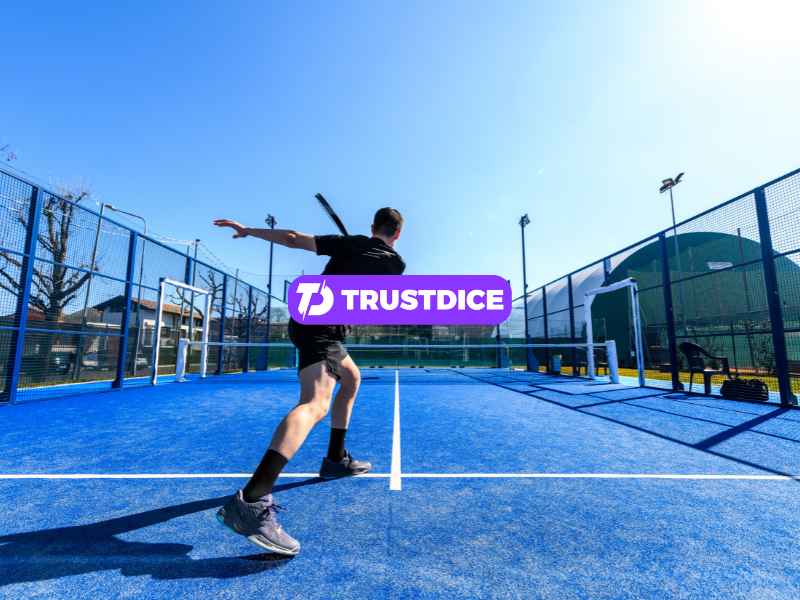
As soon as you recognize the trajectory, turn your shoulders and move backward using crossover steps. Avoid backpedaling while facing the net. Backpedaling is slower, compromises balance, and creates a greater risk of falling.
Your partner should retreat at the same time. Even if you are taking the overhead, your partner cannot remain glued to the net. If your bandeja lands short or rebounds favorably for the opponents, a divided formation exposes a large gap.
Step 2: Use the Correct Preparation
Turn sideways so that your non-dominant shoulder points generally toward the net. Raise the racket early, but keep the preparation more compact than a tennis serve or full-power smash.
Your non-racket hand should point toward the ball or remain lifted as a tracking guide. This helps judge distance, keeps the upper body organized, and prevents the chest from opening too soon.
The classic visual cue is to imagine supporting a tray with the racket. Do not interpret that too literally—the racket still moves through the ball—but it encourages a stable face and discourages an oversized loop.
Preparation cue 🧠
Turn first, move second, and swing last. Many bandeja errors begin because the player swings while still trying to find the correct position.
Step 3: Find the Contact Point
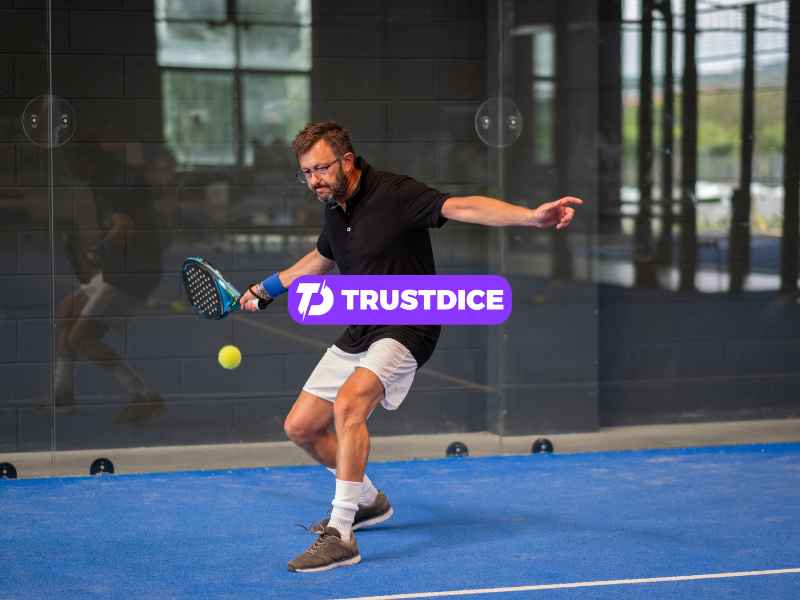
Contact should normally occur beside the body and slightly in front, around head or shoulder height. Unlike a flat smash, you do not need to reach for the highest possible point directly above you.
Create enough distance so your hitting arm is comfortably extended without becoming locked. If the ball moves behind your shoulder, control becomes difficult and the shot often floats short. If it moves too far in front, the stroke may turn into a rushed smash.
In our beginner drills, contact spacing causes more problems than racket speed. Players frequently stand underneath the ball and then bend or collapse during the swing. Moving one extra adjustment step away from the bounce line usually produces a cleaner result.
Step 4: Add Controlled Slice
Lead with the edge of the racket and allow the face to travel slightly across the back and outside of the ball. This creates slice that keeps the flight controlled and can produce a low rebound after the ball reaches the glass.
The movement should be smooth rather than violent. Excessive wrist action makes the racket face unstable. Most of the control comes from shoulder rotation, a compact arm path, and a firm but relaxed grip.
A useful beginner target is approximately 60–70% of maximum power. That figure is only a training reference, not an official requirement. The exact speed changes with court conditions, ball pressure, contact height, and the opponent’s position.
Step 5: Finish Balanced and Recover
Allow the racket to finish across the body without forcing an exaggerated follow-through. Your weight should move through the shot while your feet remain prepared for recovery.
After contact, read the quality of your bandeja. If it travels deep and keeps the opponents behind the service line, advance with your partner and rebuild a connected net position. If it lands short or sits up, pause and prepare for a counterattack.
Blindly rushing forward after every overhead is a mistake. Recovery depends on the ball you actually produced, not the shot you intended to produce.
Where Should You Aim?
The safest bandeja target is often deep through the middle. The net is slightly lower there, the available court is larger, and the shot can create uncertainty between defenders.
The opponent’s backhand corner is another useful target, particularly when the player struggles with double-glass rebounds. A deep shot toward the side wall can create an uncomfortable contact, but aiming too close to the fence increases your error margin.
Playing directly at an opponent’s body can limit their backswing and prevent an aggressive counterattack. This is especially effective when the defender is moving forward and has little time to create space.
| Target | Tactical Benefit | Potential Risk |
|---|---|---|
| Deep middle | Large target and possible partner confusion | An experienced pair may defend it comfortably |
| Backhand corner | Tests glass movement and weaker control | Smaller margin near the side wall |
| Opponent’s body | Restricts swing space | Poor depth may create an easy block |
| Open sideline | Can stretch the defensive formation | Higher chance of missing wide |
Seven Common Bandeja Mistakes
1. Trying to Hit a Winner
The most common error is using smash-level power. The player loses control, creates a large rebound, or remains out of position after the swing. Remember that the bandeja is designed to protect an advantage.
2. Moving Backward in a Straight Line
Backpedaling makes it difficult to rotate and judge the ball. Turn sideways and use crossover steps, followed by smaller adjustment steps as you approach the contact point.
3. Preparing Too Late
If the racket remains low until the ball starts descending, the player must rush both preparation and contact. Raise the racket during the first movement away from the net.
4. Standing Directly Under the Ball
Crowded spacing produces weak contact and poor visibility. Create room between your body and the ball so the racket can travel cleanly beside you.
5. Using Too Much Wrist
Attempting to manufacture slice with a sudden wrist snap changes the racket angle unpredictably. Use a stable hand and create spin through the overall swing path.
6. Choosing a Target That Is Too Ambitious
Aiming repeatedly at the side fence or a narrow corner creates unnecessary mistakes. Start with depth through the middle before experimenting with sharper angles.
7. Forgetting to Recover with Your Partner
A strong bandeja followed by disconnected movement wastes the shot. Both players should read the result and advance, hold, or retreat together.
Bandeja vs Víbora: What Is the Difference?
The bandeja prioritizes control, depth, and positional recovery. Its swing is compact, its pace is moderate, and the player generally contacts the ball slightly lower and more beside the body.
The víbora is more aggressive. The player strikes with greater speed and side spin, producing a ball that can skid unpredictably from the glass. It is often used when the lob is shorter and the attacker can contact farther in front.
Developing players should establish a dependable bandeja before chasing the víbora. If you cannot control a simple overhead while moving backward, adding more speed and spin usually magnifies the same technical problems.
How Court Conditions Affect the Shot
Warm weather, lively balls, and fast artificial turf can increase the rebound from the glass. Under those conditions, a hard bandeja may return farther into the court and give opponents an easier counterattack.
Cold temperatures and slower courts can reduce the rebound, making depth and controlled slice especially effective. Indoor ceiling height and lighting may also influence how early players recognize a lob.
Professional match analysis should therefore consider more than shot selection. When reviewing a pair through a bitcoin sportsbook, observe which player handles central lobs, how reliably the pair maintains net control, and whether their overhead style suits the conditions.
Recent form, partnership history, fitness, and opponent quality remain essential context. Anyone exploring bitcoin betting should treat tactical observations as research inputs rather than guaranteed predictions.
Padel results remain uncertain even when one pair appears technically stronger. Set a fixed entertainment budget, verify the competition format, and never chase losses through a bitcoin sportsbook.
A Simple Bandeja Practice Progression
Begin without movement. Ask a coach or partner to feed comfortable high balls while you practice the shoulder turn, contact point, and balanced finish. Aim deep through the middle at moderate speed.
Next, start near the net and move backward for each feed. Concentrate on turning before retreating. After contact, recover forward using controlled steps rather than sprinting blindly.
Add a partner and practice coordinated recovery. The non-hitting player retreats as the lob rises, protects the middle during the overhead, and advances only when the bandeja provides sufficient depth.
Finally, play conditioned points in which the attacking team may only use bandejas against lobs. This restriction removes the temptation to smash and teaches players to recognize how a controlled overhead builds pressure over several shots.
Training challenge 🏆
Hit ten bandejas that land beyond the service line without attempting a winner. Count only shots followed by a balanced recovery toward the net.
Final Bandeja Checklist
- Recognize the lob before it crosses the net.
- Turn sideways and use crossover steps instead of backpedaling.
- Prepare the racket early with a compact shape.
- Contact beside the body around head or shoulder height.
- Use controlled slice rather than maximum power.
- Aim deep through the middle before choosing smaller targets.
- Read the quality of the shot before advancing.
- Recover with your partner as one connected unit.
A reliable bandeja will not fill every highlight reel, but it solves one of padel’s most important tactical problems: defending the net against a good lob. It gives you time, keeps the opponents behind the ball, and reduces the need for reckless overheads.
Learn the movement before adding speed. Build depth before searching for sharp angles. Once you can retreat, strike, and recover without losing balance, the bandeja becomes more than another shot—it becomes the tool that holds your entire attacking formation together.