







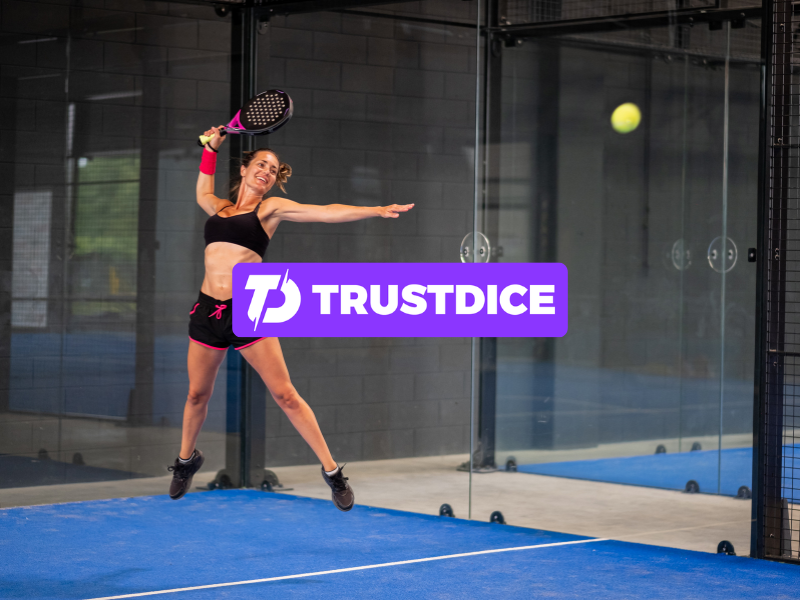
Playing more matches does not automatically make you a better padel player. If you repeat the same positioning errors, mistime the same volleys, and struggle with the same glass rebounds, extra court time may simply reinforce those habits.
Structured training offers a more effective approach. By isolating specific skills and practicing them under controlled conditions, players can improve consistency, movement, decision-making, and doubles coordination.
The good news? You do not need professional coaching facilities or expensive equipment to begin. A court, a few balls, and a training partner are enough for most fundamental exercises.
Here are ten practical padel training drills for beginners, intermediate players, and experienced competitors, including instructions, progression ideas, and common mistakes to avoid.
🎾 Why Structured Padel Training Matters
Padel requires a combination of technical accuracy, tactical awareness, movement efficiency, and communication.
Random rallies develop general familiarity, but focused drills provide opportunities to repeat particular movements and measure improvement.
A useful training session should combine controlled repetition with realistic decision-making.
For example, learning to execute a volley is valuable, but recognizing when to volley aggressively and when to prioritize control is equally important.
🎯 Drill 1: Forehand and Backhand Consistency
Start with controlled groundstroke exchanges from the backcourt.
Ask your partner to feed manageable balls alternately toward your forehand and backhand. Focus on compact preparation, stable contact, and consistent placement.
Begin with a target of ten consecutive successful returns before increasing the pace.
This drill is particularly useful for beginners who need reliable fundamentals before attempting aggressive shots.
🧱 Drill 2: Back-Glass Rebound Practice
Understanding glass rebounds is one of the biggest adjustments for players transitioning from tennis.
Have your partner feed balls that bounce and then contact the back glass. Practice waiting for the rebound before moving into a comfortable hitting position.
Start with predictable feeds and gradually introduce different speeds and angles.
The objective is to improve judgment, not simply react faster.
⚔️ Drill 3: Controlled Volley Exchanges
Position yourself near the net while your partner feeds balls from the opposite side.
Alternate forehand and backhand volleys, using short preparation and controlled racket movement.
Focus on placing the ball consistently rather than hitting as hard as possible.
As your technique improves, ask your partner to vary the feed direction to develop quicker preparation.
🏃 Drill 4: Defensive-to-Attacking Transition
Begin near the back of the court and return a defensive ball. Your partner then feeds a shorter ball that creates an opportunity to advance.
Move forward under control, prepare for a volley, and recover to an appropriate attacking position.
This drill teaches players to recognize favorable opportunities instead of rushing forward after every shot.
🎯 Pro Tip: Measure successful decisions, not just successful shots. Moving forward at the wrong moment can be a tactical mistake even when your volley technique is excellent.
🔥 Drill 5: Lob Accuracy Challenge
Practice defensive lobs from the backcourt toward designated deep areas of the opposite court.
Use a controlled upward swing and prioritize sufficient height and depth.
A successful lob should make it difficult for opponents to attack comfortably while giving you time to recover.
Once your accuracy improves, practice against a partner positioned near the net.
🌀 Drill 6: Bandeja Control Practice
The bandeja is an important overhead technique used to maintain pressure without necessarily attempting an outright winner.
Ask your partner to feed moderate lobs. Move into position and execute controlled bandejas toward selected targets.
Prioritize balance, contact quality, and recovery.
Beginners should work with a coach or experienced partner before increasing overhead speed.
📊 Which Drills Match Your Skill Level?
| Training Drill | Primary Skill | Suggested Level |
|---|---|---|
| Groundstroke consistency | Ball control | Beginner |
| Back-glass rebounds | Defensive timing | Beginner |
| Volley exchanges | Net control | Beginner–Intermediate |
| Transition practice | Court movement | Intermediate |
| Lob accuracy | Defensive placement | All levels |
| Bandeja control | Overhead technique | Intermediate |
🤝 Drill 7: Doubles Positioning and Communication
Work with your regular partner while two players on the opposite side deliver controlled shots toward different court areas.
Practice shifting together, protecting the middle, and communicating responsibility for ambiguous balls.
Use short verbal calls and maintain balanced spacing.
The purpose is to improve coordination rather than individual shot power.
⚡ Drill 8: Reaction and Split-Step Training
Stand in a ready position while a partner randomly feeds balls toward your forehand or backhand.
Perform a small split step as your partner strikes the ball, then move efficiently toward the expected contact point.
Begin slowly to establish correct timing before increasing the difficulty.
Efficient preparation can be more valuable than attempting to move at maximum speed.
🎯 Drill 9: Target-Based Serve Practice
Place flat markers in different legal service-box areas and practice directing serves toward them.
Alternate between targets while maintaining a consistent serving routine.
Focus on legal contact, placement, and recovery after the serve.
Serving accuracy helps create favorable first volleys and reduces unnecessary faults.
🏆 Drill 10: Conditioned Match Play
Finish with short practice games that reward a specific tactical behavior.
For example, require players to construct a rally before attempting an aggressive finishing shot, or award a training bonus for successful defensive-to-attacking transitions.
These are practice rules, not official scoring modifications.
Conditioned games connect isolated techniques with realistic decision-making under pressure.
📅 Sample 60-Minute Padel Training Session
A balanced session should include preparation, technical repetition, tactical practice, and recovery.
| Activity | Duration | Objective |
|---|---|---|
| Dynamic warm-up | 10 minutes | Prepare for movement |
| Groundstrokes and rebounds | 15 minutes | Improve consistency |
| Volleys and transitions | 15 minutes | Develop net play |
| Conditioned points | 15 minutes | Apply tactical skills |
| Cool-down and review | 5 minutes | Reflect and recover |
📈 How to Measure Training Progress
Track practical indicators such as consecutive successful returns, target accuracy, unforced errors, and successful tactical transitions.
Use consistent drill conditions when comparing results across sessions.
A higher success rate against easy feeds does not necessarily indicate improved performance against stronger opponents.
Gradually increase difficulty as your consistency develops.
🏟️ Learning From Professional Padel
Watching elite competition can help players recognize effective positioning, shot selection, and doubles movement.
Match footage from Premier Padel offers examples of how technical skills are applied under competitive pressure.
The International Padel Federation provides official competition information and regulations.
For readers exploring padel betting, understanding technical strengths and tactical patterns may provide useful context when analyzing matches. However, training observations alone cannot reliably predict results.
🔐 Reliable Resources and Platform Awareness
Qualified coaching, verified competition footage, and structured practice offer more dependable guidance than unsupported performance claims.
When researching commercial websites, searches involving crypto casino mirror sites or a trustdice mirror site require careful verification of website authenticity and applicable local regulations.
Anyone considering padel betting should recognize uncertainty and maintain responsible financial limits.
🚀 Final Thoughts
Effective padel improvement requires more than simply spending additional hours on court.
Structured drills develop technical consistency, tactical understanding, defensive confidence, and coordinated doubles movement.
Beginners should prioritize reliable contact and glass rebounds, while experienced players can introduce more demanding transitions, overheads, and decision-making exercises.
Choose a few weaknesses, practice them consistently, and monitor measurable progress. Over time, these focused improvements can translate into more confident movement, smarter shot selection, and stronger match performances.