







Padel is easy to start but surprisingly difficult to master. New players can enjoy rallies during their first session, yet the habits that feel natural—swinging hard, standing too close to the ball, or chasing every shot—often slow down long-term improvement.
The fastest way to become a more reliable player is to simplify your decisions. Choose forgiving equipment, move with your partner, control the centre of the court, and use the glass instead of fighting it. These practical tips will help you build a dependable foundation without requiring advanced technique.
Beginner priority 🎾
Do not measure progress by the number of spectacular winners you hit. A better early target is returning one more ball than your opponents while maintaining a useful court position.
Choose a Beginner-Friendly Padel Racket
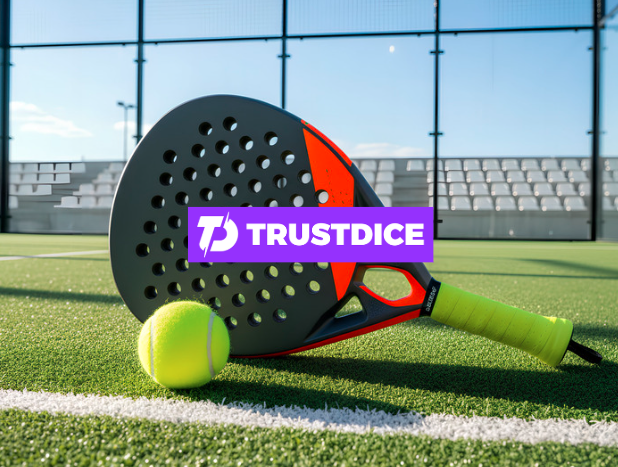
A padel racket has no strings. Its solid hitting surface contains holes, while its internal core is normally made from foam or rubber. Rackets are commonly divided into round, teardrop, and diamond shapes.
Most beginners should start with a round racket. Its larger central sweet spot makes off-centre contact more forgiving, while its balanced or head-light feel is usually easier to control. A diamond-shaped racket can generate more power, but its higher sweet spot and head-heavy balance demand better timing.
| Racket Shape | Main Strength | Best Suited To |
|---|---|---|
| Round | Control and a forgiving sweet spot | Beginners and defensive players |
| Teardrop | Balance between control and power | Improving intermediate players |
| Diamond | Additional attacking power | Experienced, attack-focused players |
A heavier racket is not automatically better. Excessive weight can make quick reactions difficult and place unnecessary stress on the wrist, elbow, and shoulder. Test several models if possible and choose one that feels stable without being tiring to manoeuvre.
Always put the racket’s safety cord around your wrist before play. The cord prevents the racket from flying across the enclosed court if it slips from your hand.
Wear Shoes Designed for Lateral Movement
Running shoes are built primarily for forward motion, whereas padel involves repeated side steps, rotations, stops, and changes of direction. A suitable court shoe provides lateral stability and dependable traction without locking your feet too aggressively to the surface.
The ideal outsole depends partly on the court. Some modern courts contain less visible sand than older artificial-grass surfaces, so traction requirements can vary. Ask the club what it recommends and replace shoes when the tread or side support becomes noticeably worn.
Equipment tip ⚡
Rent a racket for your first few sessions but wear reliable court shoes from the beginning. The correct footwear can improve confidence and reduce slipping during sideways movement.
Use Compact Swings Instead of Maximum Power
The smaller court gives players less reaction time than a full-size tennis court. Long backswings are therefore difficult to control, especially when defending near the glass or exchanging quick volleys at the net.
Prepare the racket early, keep the swing compact, and focus on contacting the ball in front of your body. Let your positioning and timing create pace. During beginner sessions, a controlled shot directed into open space is usually more effective than a wild attempt at a winner.
Keep the Ball Low
A high, comfortable ball allows opponents at the net to attack downward. When possible, direct groundstrokes and defensive returns toward their feet. A low ball is harder to volley aggressively and may force them to hit upward.
You do not need to aim for the lines. The middle of the court is often a smarter target because it reduces your margin for error and can create confusion between two opponents. It also limits the angle available for their next shot.
Learn the Lob Early
The lob is one of the most useful shots in padel. A well-placed lob travels over the net players, lands deep, and gives your team time to move forward. It is not merely an emergency shot; it is a practical way to recover the attacking position.
Avoid hitting the lob with a sudden upward flick. Open the racket face slightly, use a smooth motion, and give the ball enough height to clear both opponents comfortably. A low lob is likely to become an easy overhead.
Move as a Team
Padel positioning works best when partners maintain roughly the same depth. Imagine an invisible rope connecting you. If your partner moves toward the net, move forward with them. If your partner retreats to defend, drop back as well.
This coordinated movement prevents opponents from exploiting the large diagonal space created when one player stays at the net and the other remains near the back wall. Partners do not have to stand perfectly level, but they should normally operate as one defensive or attacking unit.
| Match Situation | Recommended Position | Main Objective |
|---|---|---|
| Defending a strong attack | Both players behind the service line | Use time, space, and wall rebounds |
| After a successful deep lob | Advance together | Take control of the net |
| Attacking at the net | A few steps behind the net | Volley while retaining reaction time |
| Ball travels through the middle | Communicate immediately | Prevent hesitation or collisions |
Positioning reminder 🎯
The net is an attacking position, but standing directly on top of it leaves you vulnerable to lobs. Keep enough distance to react while remaining close enough to volley effectively.
Let the Glass Help You
Many beginners panic when the ball approaches the back wall. They rush forward, reach behind their bodies, and attempt a difficult shot before the rebound. In many situations, letting the ball bounce against the glass creates more time and a cleaner contact point.
Watch the ball after its first bounce and move away from the wall to create space. Keep the racket prepared and wait for the rebound to travel in front of you. The correct distance depends on the speed, spin, angle, and height of the incoming shot, so repetition is essential.
Start by practising slow feeds from the back wall. Once you can read a simple rebound, add side-wall angles and faster shots. Glass defense becomes less intimidating when learned in stages.
Seven Common Beginner Mistakes
1. Trying to Hit Every Ball Hard
Maximum power reduces control and often creates a comfortable rebound for the opposition. Use pace selectively and build the point before attempting an attacking finish.
2. Staying at the Back After a Good Lob
A deep lob may force the opposition away from the net. If both beginners remain at the back, they surrender the opportunity they just created. Move forward together when the lob gives you enough time.
3. Standing Too Close to the Glass
Players need space to react to rebounds. Standing directly against the back wall can leave the ball trapped behind the body. Begin slightly forward and adjust after reading the bounce.
4. Forgetting to Recover
Your work does not end after contact. Return to a balanced position immediately instead of admiring the shot or remaining near the side wall.
5. Ignoring the Middle
Beginners often protect only their nearest side wall, leaving the centre exposed. Move laterally with your partner and agree who will take balls travelling between you.
6. Using a Tennis-Style Backswing
A large loop can make fast volleys and defensive shots late. Short preparation is more reliable in the compact playing area.
7. Staying Silent
Simple calls such as “mine,” “yours,” “leave,” and “back” prevent confusion. Communication becomes particularly important when one partner faces the back wall and cannot see the opponents moving.
A Simple Practice Plan for New Players
Spend ten minutes controlling straight groundstrokes, followed by ten minutes practising volleys with short swings. Then work on slow back-glass rebounds before finishing with lobs and coordinated movement from defense to attack.
Do not introduce every advanced shot at once. Consistent forehands, backhands, volleys, lobs, and wall returns provide enough variety for early matches. More specialized overheads can be added after those foundations feel comfortable.
Following Padel Beyond the Court
Watching experienced teams can accelerate your learning. Focus on their movement between the back of the court and the net rather than watching only the ball. Notice how rarely top players attempt a low-percentage winner from a weak defensive position.
Some fans also explore professional matches through a bitcoin sportsbook. If you follow that route, research current partnerships, recent results, court conditions, and tournament formats rather than relying only on player reputation.
Responsible bitcoin betting should remain entertainment, with a fixed budget that does not affect essential spending. No tactical analysis can guarantee a result, even when a favourite appears dominant. Set limits before opening a bitcoin sportsbook and never chase a previous loss.
Final Thoughts
Beginner padel improves quickly when you replace force with control. Select a forgiving round racket, wear supportive court shoes, shorten your swing, and practise letting the glass create time. Most importantly, move forward and backward with your partner instead of treating the court as two separate lanes.
Your first objective should be consistency rather than perfection. Keep the ball low, use the middle, develop a dependable lob, and communicate during every rally. Those simple habits will help you win more points now while creating a strong foundation for advanced padel later.