







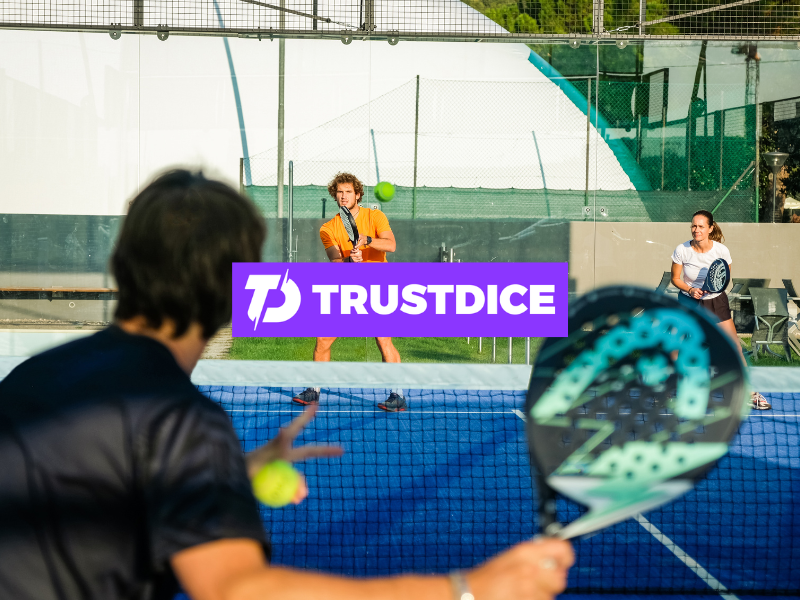
Padel is fundamentally a doubles sport, which means individual technique can only take you so far. Two talented players who move independently can easily lose to a more disciplined pair that understands positioning, communication, and shared court coverage.
The strongest partnerships behave almost like one unit. They attack together, defend together, protect the middle, and recognize when one player needs to cover for the other. This 2026 guide explains the essential doubles tactics that can make any padel pair more difficult to beat.
Why Pair Positioning Matters So Much
Imagine an invisible rope connecting you and your partner. When one player moves toward the side wall, the other should adjust rather than remaining completely stationary.
This coordinated movement helps prevent large gaps from appearing in the middle of the court.
| Situation | Pair Response |
|---|---|
| Moving toward the net | Advance together |
| Opponent plays a deep lob | Retreat and reorganize together |
| Partner covers wide ball | Shift toward the exposed middle |
| Defending from the back | Maintain balanced spacing |
Pair Tip 🎯
Do not judge your position independently. A technically correct position can become tactically wrong if your partner is several meters away.
Who Should Cover the Middle?
The middle creates one of the most common communication problems in recreational padel. Both players may leave the ball because they expect their partner to hit it—or both may attack the same ball and collide.
Responsibility depends on positioning, shot direction, dominant hands, and which player has the more comfortable contact.
The solution is communication. Short calls such as “mine,” “yours,” or “leave” remove uncertainty without distracting either player.
Attack the Net as a Team
If one player reaches the net while the partner remains near the baseline, opponents can attack the enormous space between them.
When your pair creates an opportunity to advance, both players should normally move forward while maintaining appropriate spacing.
The same principle applies when retreating. If a deep lob forces one player backward, the partner should recognize that the attacking formation may no longer be sustainable.
⚔️ Tactical Insight: Two average volleys from a coordinated pair are often more difficult to beat than one excellent volleyer standing alone at the net.
Understand Left-Side and Right-Side Roles
Players often develop preferences for one side of the court. These roles can influence who handles particular middle balls, overheads, and attacking opportunities.
However, the roles should not become rigid. Every rally creates different situations, and both players need enough versatility to defend, volley, lob, and cover space.
| Pair Skill | Why It Matters |
|---|---|
| Communication | Reduces uncertainty on shared balls |
| Synchronized Movement | Closes exploitable gaps |
| Role Awareness | Clarifies tactical responsibilities |
| Adaptability | Helps the pair respond to changing match patterns |
Communication Goes Beyond Calling the Ball
Your partner cannot always see what is happening behind them. When opponents move during a lob or defensive exchange, simple information can help your teammate choose the next shot.
Communication is also valuable between points. Discuss repeated patterns rather than criticizing individual mistakes. If opponents consistently target one area, decide together how to adjust.
In our match analysis, coordinated pairs often improve during a match because they recognize patterns collectively instead of treating every lost point as an isolated error.
Protect the Middle Without Giving Away the Sides
The middle is attractive because it can create hesitation between partners. Good pairs therefore maintain enough spacing to protect central areas while remaining capable of covering their own side.
When one player is pulled wide, the partner should shift toward the middle. Once the pair recovers, both players can return to a more balanced formation.
Positioning Tip 🏆
Think of court coverage as expanding and contracting. Your pair should constantly adjust the space between you according to the ball and opponents.
Do Not Blame Your Partner After Errors
Doubles performance can deteriorate quickly when frustration affects communication. A missed volley or poor lob is already one lost point; turning it into several points through arguments makes the mistake much more expensive.
Keep communication specific and tactical. Instead of discussing who caused the previous error, decide what your pair should do on the next similar ball.
This is especially important during close games, when confidence and decision-making can change rapidly.
How to Practice as a Pair
Many players practice strokes individually but rarely train partnership movement. Try drills where both players advance and retreat together while maintaining consistent spacing.
Another useful exercise places one pair at the net and another at the back. The defenders attempt to regain the net through controlled lobs while the attackers coordinate overhead coverage.
Finally, practice middle balls deliberately. Decide responsibilities before the drill and communicate on every ambiguous shot.
Pair Chemistry in Professional Padel
Professional padel demonstrates why partnerships matter so much. A pair is not simply the combined ability of two individuals. Playing styles must complement each other, and both players need to understand how their partner reacts under pressure.
This is particularly relevant for fans researching padel betting. Recent partnership changes, pair chemistry, court positioning, form, tactical matchups, and tournament conditions can all provide useful context when analyzing a match.
Individual rankings alone cannot fully describe how effectively two players operate together.
Following Padel Online Safely
As padel coverage expands, fans increasingly use online platforms for scores, tournament information, statistics, and sports markets. Always verify the website before entering account details.
Users searching for crypto casino mirror sites should confirm alternative addresses through legitimate sources instead of trusting unfamiliar third-party links.
The same principle applies when looking for a trustdice mirror site. Verify the destination before entering login credentials or other personal information.
Final Thoughts
Successful padel doubles is built around coordination. Move forward together, retreat together, communicate on uncertain balls, and adjust your spacing whenever one player is pulled away from position.
Individual skill still matters, but partnership quality determines how effectively that skill can be used. The best pairs make the court feel smaller for their opponents because very little space remains unprotected.
When you stop thinking about “my side” and “your side” and start thinking about shared court control, your doubles strategy becomes significantly stronger.